Introduction
An embedded system is a specialized computer system designed to access, process, store, and control data in electronic devices. It is a combination of hardware and software, where the software (called firmware) is embedded into the hardware.
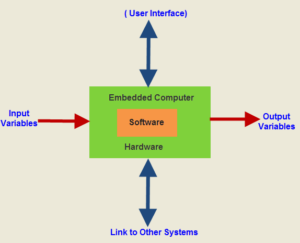

One of the most important features of an embedded system is that it provides output within specific time constraints. Embedded systems make devices more precise, efficient, and convenient. They are widely used in both simple and complex electronic devices such as microwaves, calculators, TV remote controls, home security systems, and traffic control systems.
Embedded System Basics
An embedded system consists of two main parts:
- Embedded System Hardware
- Embedded System Software

Embedded System Hardware
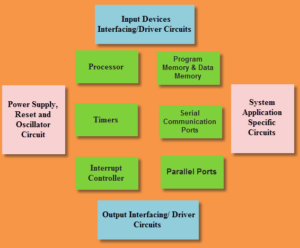
The hardware of an embedded system is built around a microprocessor or microcontroller. It includes input/output interfaces, memory, display units, and communication ports. Major hardware components include:
- Power Supply
- Processor (Microprocessor / Microcontroller)
- Memory
- Timers
- Input/Output Circuits
- Serial Communication Ports
- Application Specific Circuits (ASIC / ASIP / ASSP)
Embedded System Software
The software of an embedded system is designed to perform a specific function. It is usually written in high-level programming languages and then compiled into machine code. The compiled code is stored in non-volatile memory such as ROM or Flash memory. The software must consider the following constraints:
- Limited system memory
- Limited processor speed
- Low power consumption during operation (run, sleep, wake-up modes)
RTOS (Real-Time Operating System)
A Real-Time Operating System (RTOS) is an operating system designed to complete tasks within a specified time limit. It ensures accurate and timely execution of tasks.
RTOS manages hardware resources and supports application programs. It is widely used in industrial automation, measurement systems, and safety-critical systems, where delays may lead to serious hazards.
Memory and Processors Used in Embedded Systems

Different types of processors used in embedded systems include:
- Microprocessor
- Microcontroller
- Digital Signal Processor (DSP)
- RISC Processor
- ARM Processor
- ASIP (Application-Specific Instruction-set Processor)
- ASSP (Application-Specific Standard Product)
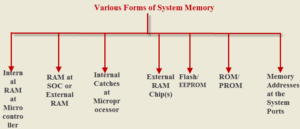
Embedded system memory types include:
- ROM (Read Only Memory)
- RAM (Random Access Memory)
- Flash Memory
- EEPROM
Characteristics of Embedded Systems
- Performs a specific dedicated function
- Operates in real-time conditions
- Low power consumption
- Compact size and low cost
- High reliability
- Built around a microcontroller or microprocessor
- Requires memory to store firmware
- Includes both hardware and software components
Many embedded systems must respond continuously to input changes and process data in real time. For example, a car cruise control system constantly monitors speed and brake sensors and adjusts acceleration accordingly.
Applications of Embedded Systems
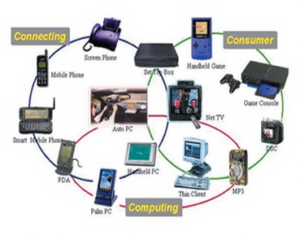

1. Automotive Systems
- Motor control
- Cruise control
- Engine safety
- Body safety systems
- Car multimedia and entertainment
- Robotics in assembly lines
2. Telecommunications
- Mobile phones
- Wireless communication systems
- Networking devices
3. Smart Cards
- Banking systems
- Telephone systems
- Security systems
4. Aerospace and Defense
- Satellites
- Missiles
- Defense communication systems
5. Computer Networking and Peripherals
- Printers
- Network cards
- Monitors and displays
- Image processing systems
6. Consumer Electronics
- Set-top boxes
- DVD players
- High-definition televisions
- Digital cameras
Conclusion
Embedded systems are an essential part of modern electronic devices. They combine hardware and software to perform dedicated functions efficiently and reliably. Due to their real-time performance, low power consumption, and compact design, embedded systems are widely used across industries including automotive, telecommunications, consumer electronics, aerospace, and industrial automation.