

Introduction
To connect electronic devices such as computers, laptops, DVD players, and gaming consoles to display devices like monitors, projectors, and televisions, interface standards such as VGA and HDMI are commonly used.
VGA and HDMI stand for Video Graphics Array and High-Definition Multimedia Interface, respectively. While VGA is an older technology that transmits only video signals, HDMI is a modern interface capable of transmitting both high-quality digital video and audio through a single cable.
Difference Between VGA and HDMI
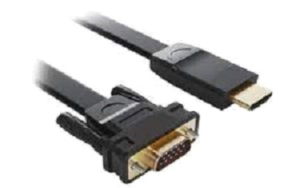


The main difference between VGA and HDMI lies in the type of signal they transmit. VGA uses analog signals, whereas HDMI uses digital signals. This difference significantly affects video quality, audio support, and overall performance.
What is VGA?
VGA (Video Graphics Array) is an older video display standard originally developed by IBM for personal computers. Despite being outdated, VGA is still used in some legacy systems and older monitors.
VGA supports a maximum standard resolution of 640 × 480 pixels at a refresh rate of 60 Hz, though higher resolutions are possible with limitations. VGA transmits analog video signals only and requires a separate cable for audio transmission. A VGA connector typically has 15 pins arranged in three rows and is commonly identified by its blue color.
What is HDMI?
HDMI (High-Definition Multimedia Interface) is a modern digital interface developed by a group of electronics manufacturers including Sony, Panasonic, Philips, Toshiba, and others.
HDMI was designed to transmit uncompressed digital video and multi-channel digital audio through a single cable. It supports advanced features such as high resolutions, high refresh rates, Consumer Electronics Control (CEC), and minimal signal interference.
Main Differences Between VGA and HDMI
| VGA | HDMI |
|---|---|
| Developed by IBM | Developed by companies like Sony, Panasonic, Philips, Toshiba, and others |
| Stands for Video Graphics Array | Stands for High-Definition Multimedia Interface |
| Older technology | Modern technology |
| Transmits video signals only | Transmits both audio and video signals |
| Uses analog signals | Uses digital signals |
| Lower video quality | Higher video and audio quality |
| Requires separate cable for audio | No separate audio cable required |
| Supports limited resolutions | Supports high resolutions and refresh rates |
| Maximum refresh rate around 60–85 Hz | Supports refresh rates up to 240 Hz (depending on version) |
| More signal interference | Minimal signal interference |
| Commonly used in older monitors and PCs | Used in modern TVs, gaming consoles, and media players |
| 15-pin connector, not hot-pluggable | 19-pin (or more) connector, hot-pluggable |
Which is Better: HDMI or VGA?
Based on the comparison above, HDMI is clearly superior to VGA in almost every aspect. HDMI provides higher resolution, better color accuracy, faster refresh rates, and integrated audio transmission.
For watching movies, playing high-end video games, or using modern display devices, HDMI is the preferred choice. It delivers sharper images, richer colors, and cleaner signals without the need for additional audio cables.
VGA, on the other hand, is suitable only for older systems or when HDMI is unavailable. Its analog nature results in lower image quality and higher signal distortion.
Conclusion
Both VGA and HDMI are widely used display interfaces, but they differ significantly in technology and performance. VGA is an older analog standard primarily used in legacy systems, while HDMI is a modern digital interface that supports high-definition video and audio.
For modern applications, HDMI is the better option due to its superior quality, convenience, and compatibility with current devices.