


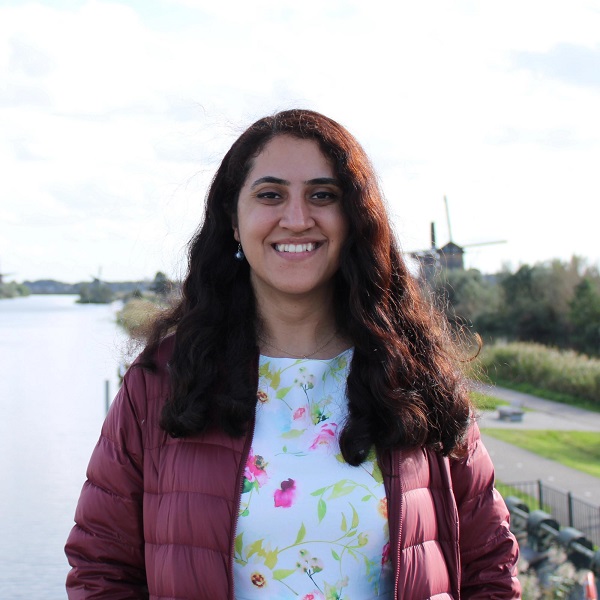
With International Women’s Day around the corner, Semiconductor For You highlights women contributing to the global semiconductor industry. In this special interaction, Vaishali Umredkar, Editor of Semiconductor For You speaks with Shagun Kapur, who remotely supports fabrication operations for GlobalFoundries from India. She shares insights on materials-driven process optimisation, global fab collaboration, and the growing opportunities for women engineers in semiconductor manufacturing.
Your career journey spans materials science research in the US to remotely supporting GlobalFoundries fabs from India. How does materials expertise translate into real-time semiconductor process optimization?
Semiconductor process optimization requires expertise in various domains, from a high-level overview of device physics to a deep understanding of each material involved, along with their potential failure mechanisms. My Bachelor’s in Electronics provided me with a foundation of semiconductor devices, and my subsequent stint in the US helped deepen my materials science knowledge. Working every day in the lab on hands-on materials fabrication and defect analysis gave me an intuitive understanding of the various defects that might impact our ideal production material, and the capability to identify their root causes. This understanding translates directly into semiconductor process optimization, where I can analyze SEM (Scanning Electron Microscope) images and understand the tool and material idiosyncrasies leading to the output, and consequently explore innovative ways to improve our results.
GlobalFoundries’ remote fab-support model allows engineers in India to monitor and control fabrication lots worldwide. Can you describe how this collaboration works in practice and its impact on fab efficiency?

GlobalFoundries has a unique model wherein a qualified Engineer in India can support our Fab processes end-to-end in Fabs worldwide. This enables the fab to have multiple time zone coverage, which dramatically reduces resolution time for critical issues. Another significant advantage of having a team of engineers from different geographies is that they can look at a problem statement through different lenses, allowing for enhanced innovation and comprehensive solutions to a challenge.
You work closely with international teams such as counterparts in Germany. What skills are essential for engineers contributing to global semiconductor manufacturing from remote locations?
The skillset required of a remote Fab engineer is, in practice, very similar to that of an engineer on the Fab floor. The roles are considered interchangeable, and a remote engineer requires as much knowledge of the tools, the processes, device physics and materials science as their Fab counterparts. At GlobalFoundries, all engineers are on par regardless of their physical location, and are expected to have the background, knowledge and experience required to contribute significantly to the fabrication facility. We also have multiple training programs to train engineers to understand process, systems and challenges in the Fab.
Semiconductor fabrication is often perceived as location-bound to fabs. How is the rise of digital fabs and automation changing career opportunities for women engineers in countries without fabs?
India has a strong population of talented Electronics Engineers. These engineers largely choose careers in semiconductor designing and verification. However, as semiconductor manufacturing becomes a strategic priority across the globe, India’s commercial ecosystem is expanding into OSATs, Fabs and digital manufacturing. GlobalFoundries is among the pioneers of digital fabs, with women making up nearly a third of our engineering workforce. This allows women engineers to reach beyond usual careers and explore opportunities previously inaccessible in India. As India’s semiconductor manufacturing presence grows, it positions us as a strong force in a field of growing geopolitical and economic consequence.
You deliberately returned to India to pursue semiconductor fabrication work. What does India’s emerging semiconductor ecosystem mean for women engineers seeking careers in advanced manufacturing?
As a woman engineer with a background in electronic materials, I believed my career could only be realized abroad. From the day I chose my field, I aspired to study and work in the US or Europe since opportunities in India were limited. However, five years down the line I saw India grow exponentially in semiconductor manufacturing. With multiple companies exploring and financing OSATs and Fabs, and remote manufacturing roles becoming more viable, I saw India as a realistic option for an incredible career in semiconductor fabrication. I believe Indian women engineers and women studying to be engineers would find a job landscape where semiconductor manufacturing is not only a good option, but one of the most fundamental engineering disciplines.