

Introduction
A magnetic sensor is a device that detects the presence, strength, or changes in a magnetic field. It senses magnetism generated by a magnet or electric current and produces a corresponding electrical output. These sensors are fast, reliable, and have a long operational life. They can be easily integrated with electronic circuits and are widely used in modern electronic systems.
Working Principle
Magnetic sensors operate by detecting variations in magnetic fields. When a magnetic field is present or changes, the sensor responds by generating an electrical signal proportional to the field strength.


Types of Magnetic Sensors
1. Coil-Based Magnetic Sensors
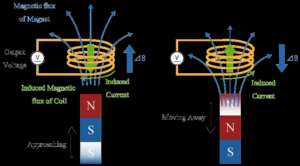


These are the simplest types of magnetic sensors. They detect changes in magnetic fields using electromagnetic induction.
- Operate based on changing magnetic flux
- Used in basic sensing applications
2. Reed Switch
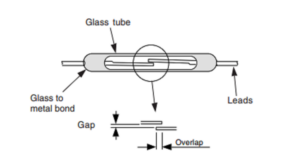

A reed switch consists of two thin ferromagnetic metal strips (reeds) enclosed in a sealed glass tube filled with inert gas.
- When a magnetic field is present, the reeds attract each other and close the circuit.
- When the magnetic field is removed, the reeds separate and open the circuit.
3. Hall Effect Sensor
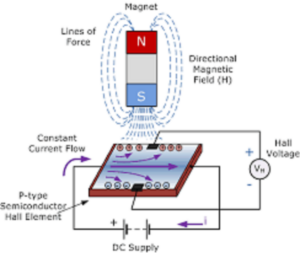

A Hall effect sensor works based on the Hall Effect. When a magnetic field is applied perpendicular to a current-carrying conductor, a voltage (called Hall voltage) is generated at right angles to both the current and the magnetic field.
- Provides precise measurement of magnetic fields
- Widely used in modern electronic devices
Applications of Magnetic Sensors
- Position and speed detection
- Automotive systems (ABS, speed sensors)
- Mobile phones and electronic devices
- Industrial automation
- Security systems (door sensors)
- Current sensing in electrical circuits
Conclusion
Magnetic sensors play an important role in detecting and measuring magnetic fields. With various types such as coil sensors, reed switches, and Hall effect sensors, they are widely used in electronics, automation, and everyday applications.