

A weak optical signal can limit a carefully designed photonic system. Semiconductor amplification increases its strength without first converting it into an electrical signal. The challenge is to achieve the required gain while keeping bandwidth, noise and output power within operating limits.
In fiber-optic links, sensing equipment and research instruments, a SOA semiconductor optical amplifier boosts light passing through a semiconductor gain medium. An injected current enables stimulated emission, generating additional photons that reinforce the signal.


What Determines SOA Performance
Gain is only one part of the specification. A device may prove unsuitable if its bandwidth misses the required wavelengths or noise and saturation affect the signal. Engineers need to assess the full operating range, not just one figure.

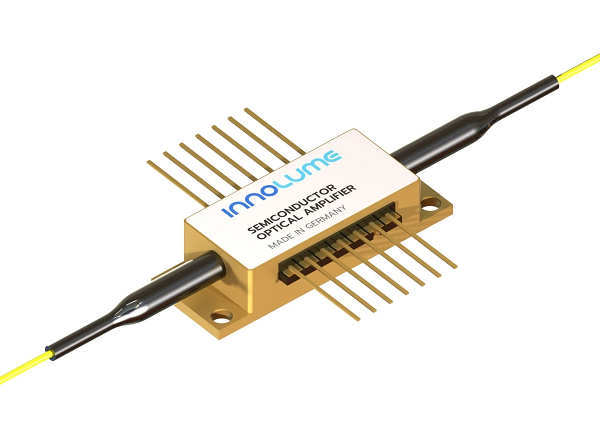

Key parameters include:
- Small-signal gain: how much a weak input signal is amplified, expressed in decibels.
- Gain bandwidth: the wavelength range over which useful amplification is available.
- Saturation output power: the level at which small-signal gain can no longer be maintained.
- Noise figure and polarization response: factors affecting signal quality and system compatibility.
Specifications should be checked against the intended wavelength, input power and drive current.
Applications and Integration
SOAs are used in optical communication systems, preamplifiers, tunable and swept-source lasers, fiber-optic sensors and photonic research. Their compact structure can suit systems where a separate amplification stage is impractical. Depending on the design, they may also support optical switching or wavelength conversion.
Before selecting a component, teams should confirm:
- operating wavelength and gain bandwidth;
- input signal level and target output power;
- noise, polarization and saturation requirements;
- fiber type, package, thermal conditions and drive electronics.
These checks help prevent a mismatch within the optical chain.
A Configuration That Fits the System
Specialized photonic systems may require a specific combination of wavelength, spectrum, output power and package design. Innolume GmbH develops semiconductor optical amplifiers (SOAs) with customization options to meet application-specific requirements. Its portfolio includes different package formats, while in-house production and R&D capabilities support the development of tailored photonic components.
Innolume’s SOA portfolio covers models with different gain and bandwidth characteristics for a range of applications. Selecting the right component involves assessing operating conditions, optical performance and integration requirements. The company’s specialists can help engineers review available specifications and identify a suitable configuration based on the system’s technical needs.