

As AI workloads scale beyond the limits of conventional computing, a new generation of hardware startups is reshaping performance, efficiency, and deployment models

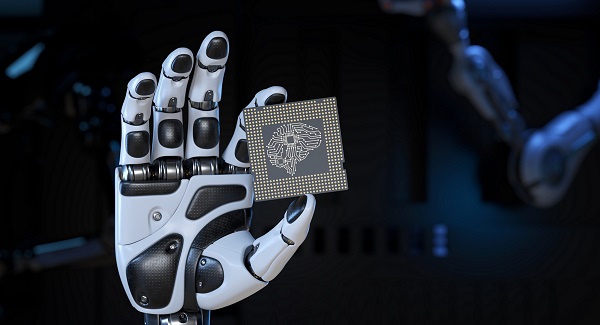
Artificial intelligence is entering a phase where advances in algorithms alone are no longer sufficient. The rapid rise of large language models, generative AI, and real-time inference has placed unprecedented demands on compute infrastructure. Performance today is defined not only by raw throughput, but by energy efficiency, memory bandwidth, scalability, and predictability. Addressing these challenges is a growing ecosystem of AI hardware startups that are rethinking silicon architectures for the AI era.
Unlike traditional processor vendors, these startups are not aiming for general-purpose dominance. Instead, they are designing hardware optimized for specific AI workloads, ranging from cloud-scale model training to low-power edge inference. In doing so, they are reshaping how performance is measured and delivered across the global AI value chain.
The Case for Rethinking AI Compute
Modern AI models place extreme stress on existing computing architectures. Training requires massive parallelism and high-speed interconnects, while inference increasingly demands low latency and deterministic performance. GPUs have played a central role in enabling AI adoption, but their power consumption, cost, and scaling limitations are becoming more apparent as workloads grow.

AI hardware startups are addressing these constraints through workload specialization. By focusing on AI-specific operations such as matrix multiplication, attention mechanisms, and sparse computation, they are able to achieve higher utilization and significantly better performance per watt than traditional architectures.
Domain-Specific Accelerators Gain Momentum
One of the most prominent trends in AI hardware development is the rise of domain-specific accelerators. These processors are designed to execute AI workloads more efficiently by eliminating unnecessary general-purpose features.
Companies such as Tenstorrent and Graphcore are developing architectures that prioritise parallel dataflow, scalable interconnects, and software flexibility for AI training and inference. Their approaches challenge conventional CPU- and GPU-centric models by aligning hardware design closely with AI workload characteristics.
In contrast, Groq has focused on deterministic execution for inference. By simplifying its architecture and removing sources of variability, it delivers predictable, ultra-low-latency performance—an increasingly important requirement for real-time AI applications.
AI hardware innovation is shifting from general-purpose computing to architectures purpose-built for specific AI workloads.
Transformer-Centric and Wafer-Scale Architectures
As transformer models dominate AI workloads, some startups are designing chips specifically around these architectures. Etched.ai is pursuing transformer-optimised ASICs that focus on attention and dataflow efficiency rather than broad programmability.
At the other end of the scale, Cerebras Systems has introduced wafer-scale AI processors, integrating an entire silicon wafer into a single compute engine. This approach significantly reduces interconnect bottlenecks and enables very high compute density, making it well-suited for training large AI models.
Memory-Centric Computing Addresses the Data Bottleneck
Data movement has emerged as a major limitation in AI systems, often consuming more power than computation itself. To address this, startups such as Mythic and Axelera AI are developing memory-centric and compute-in-memory architectures.
By bringing computation closer to memory, these designs reduce latency and power consumption, particularly for inference workloads. Such approaches represent a shift from compute-centric design toward architectures where memory plays a central role in determining system performance.
AI Hardware Startups Reshaping Performance
Global Innovators
- Tenstorrent (Canada/US) – Scalable AI processors with flexible cores for training and inference
- Groq (US) – Deterministic, low-latency AI inference accelerators
- Graphcore (UK) – Intelligence Processing Units optimised for parallel AI workloads
- Etched.ai (US) – Transformer-specific ASICs for large language models
- Cerebras Systems (US) – Wafer-scale processors for large-scale AI training
- Mythic (US) – Analog compute-in-memory AI accelerators
- SiMa.ai (US) – Integrated hardware–software AI platforms
- Hailo (Israel) – Low-power AI processors for edge and embedded systems
- Axelera AI (Europe) – Memory-centric accelerators for vision and edge AI
- Rebellions (South Korea) – AI chips optimised for large-scale inference workloads
India-Based Deep-Tech Startups
- Netrasemi – Edge AI SoCs for vision, IoT, and surveillance
- Mindgrove Technologies – Secure, low-power microcontroller and AI-enabled SoCs
- BigEndian Semiconductors – Vision processing and AI accelerator solutions
- NeuroSparq – Energy-efficient edge AI silicon for healthcare applications
- Maieutic Semiconductor – AI-driven acceleration of analog IC and chip design
- InCore Semiconductors – RISC-V processors with embedded AI capabilities
- Saankhya Labs – AI chips for communications and broadcast infrastructure
- SenseSemi – AI-enabled semiconductor solutions for industrial systems
Hardware–Software Co-Design Becomes Critical
Performance gains increasingly depend on the tight integration of hardware and software. Startups such as SiMa.ai are emphasising full-stack platforms, combining silicon, compilers, runtimes, and tools to simplify deployment and improve efficiency. This hardware–software co-design approach is becoming a key differentiator in a crowded market.
Edge AI Redefines Performance Metrics
As AI moves closer to the edge, performance requirements shift toward power efficiency, thermal management, and real-time response. Startups including Hailo, Axelera AI, and several Indian companies are enabling this transition with processors optimised for inference under constrained conditions.
Future AI performance will be judged as much by efficiency and predictability as by raw compute throughput.
Looking Ahead
AI hardware startups face significant challenges, including long development cycles, high capital requirements, and competition from established semiconductor players. However, their role in shaping the future of AI infrastructure is increasingly evident.
As AI workloads continue to diversify and scale, the industry is moving toward heterogeneous computing environments that combine general-purpose processors with specialised accelerators. In this transition, AI hardware startups are playing a critical role in redefining performance for the next phase of AI adoption.