

Munich, Germany – 31 August 2026 – Infineon Technologies AG (FSE: IFX / OTCQX: IFNNY) radiation-hardened HiRel power devices are aboard the Nancy Grace Roman Space Telescope, which lifted off from Kennedy Space Center in Florida, marking the successful launch of NASA’s next flagship space observatory. The Roman Space Telescope will travel to the second Sun-Earth Lagrange point (L2), more than 1.5 million kilometers from Earth, the same orbital position as the James Webb Space Telescope, where stable gravitational conditions and an unobstructed view of a wide swath of the sky will support the mission’s scientific program. The Roman Space Telescope mission adds to Infineon’s space heritage that stretches back to the 1970s, during which the company supported hundreds of space missions including navigation satellites, the International Space Station, and NASA’s Artemis program, with rad-hard components that have traveled more than 20 billion kilometers from Earth.
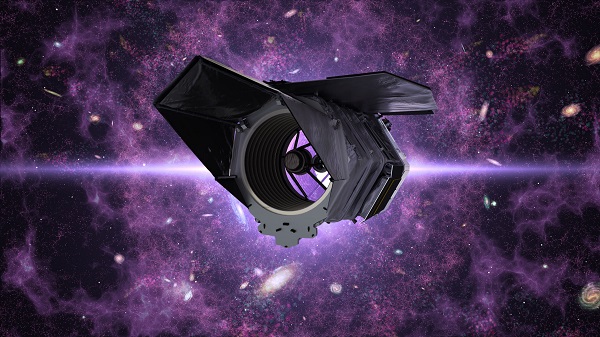
“The launch marks the beginning of what will be one of the most scientifically productive space observatory missions ever undertaken, and Infineon’s HiRel technology is part of that from day one,” said Mike Mills, Senior Vice President and General Manager HiRel at Infineon. “Roman will operate at L2 for up to a decade with no possibility of maintenance or servicing. At that distance, in that radiation environment, power technology has to work flawlessly from day one and keep working. Space programs require technologies and partners they can rely on for decades, and the selection of Infineon’s HiRel devices for the Roman mission reflects the qualification depth and mission heritage that the space industry demands from a strategic technology partner.”


Beyond Earth’s protective magnetic field, high-energy particles strike electronic components unimpeded and can permanently damage or destroy them, causing mission failure. Infineon’s radiation-hardened technology addresses these mechanisms not through passive shielding, but through a semiconductor architecture that is radiation-resistant by design.
Infineon’s HiRel portfolio integrated into the Roman Space Telescope includes rad-hard power semiconductor components. The devices are qualified to MIL-PRF standards with Total Ionizing Dose (TID) and Single Event Effects (SEE) characterization, providing the performance margins required for sustained operation at L2. Roman’s onboard systems will downlink approximately 1.4 terabytes of raw science data per day to ground stations in New Mexico, Australia, and Japan, representing the highest data volume of any NASA astrophysics mission to date. Reliable, continuous power delivery to the telescope’s instruments and data systems is a prerequisite for meeting this operational cadence across the full duration of the mission.
Infineon’s HiRel product range spans radiation-hardened silicon power MOSFETs, gallium nitride (GaN) transistors, gate drivers, solid-state relays and diodes, backed by in-house fabrication, robust radiation testing capabilities and guaranteed long-term product availability. Infineon’s JANS-qualified rad-hard 100 V GaN transistor, the first and only internally manufactured rad-hard GaN transistor on the market qualified per MIL-PRF-19500, represents the leading edge of this portfolio. GaN enables lower switching losses, higher power density, and higher switching frequencies, reducing power losses and magnetic component requirements and delivering measurable weight and volume savings at the system level, where every gram counts in space applications.
Availability
Further information on Infineon’s HiRel radiation-hardened power portfolio is available at www.infineon.com/hirel.