

Serving 300,000 customers across 150 countries, TME combines product breadth, operational excellence, and global expansion to strengthen its position among the world’s leading electronics component distributors.
Just a few years ago, the role of an electronic components distributor seemed relatively clearly defined: provide a wide range, competitive prices, and efficient delivery. However, the experiences of 2020–2026 showed that such a model was no longer sufficient. When supply chains were disrupted by the pandemic, logistical bottlenecks, geopolitical tensions, and sharp spikes in demand in selected technology segments, the market forced a change in distribution functions. Today, a distributor is no longer solely responsible for selling a component. Increasingly, they help the customer ensure component availability at every stage—from design to delivery.
This shift is not merely a change in marketing approach. It is an actual response to hard market data. According to Susquehanna Financial Group, the average lead time for semiconductors increased from about 13.6 weeks in May 2020 to a record 27.1 weeks in May 2022 (source: https://www.techbrew.com/stories/2022/06/10/finally-it-might-be-the-beginning-of-the-end-of-the-semiconductor-shortage), and only then began to gradually decline. At the same time, industry organizations such as ECIA pointed to a broad extension of delivery times also in categories of passive elements and electromechanical components, with simultaneous cost pressure related to energy, materials, and transportation. After a period of inventory correction in 2023–2024, the market did not return to its former stability; despite improvements in many categories, the development of AI and data center infrastructure generates new local shortages, especially in memories and selected high-performance circuits. According to WSTS forecasts, the global semiconductor market was expected to reach about $772 billion in 2025 and about $975 billion in 2026, further increasing the importance of managing availability, not just the purchase transaction itself.


In such conditions, those players who can reduce uncertainty on the customer’s side gain an advantage. It’s no longer just about asking, “Is the part available today?” but about a whole set of issues: how quickly it can be obtained, whether a safe substitute exists, how to integrate product data with the customer’s purchasing system, and how to reduce the risk of errors and delays. In practice, this means that the physical component is today the final element of a broader process that includes data, logistics, and reducing risk on the customer’s side—notes Grzegorz Kobalczyk, Sales Director at TME.
Response from Distributors
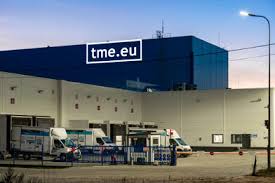

A good example of this transformation is TME. The company operates in a high service/e-catalog model and builds its position on a combination of scale, availability, and operational efficiency. TME serves a base of 300,000 customers in 150 countries, offers about 1.3 million products, and ships about 6,000 packages daily. At the same time, it is expanding internationally, including a presence in China (since 2018) and the USA (since 2019), which is a response to shifts in demand and supply on a global scale. In the sales structure, there is no one dominant group of products—the development of individual segments remains balanced. TME’s position is also confirmed by industry rankings—the company was included in the ECIA Global Top 50 and among the top companies in the EMEA region and the High Service/E-Catalog category.
Component distribution is becoming a service of managing technological continuity for the customer.
”
— Grzegorz Kobalczyk
Access to Product Data and Integration of Purchasing Systems
The first pillar is information. In the context of high market variability, warehouse availability alone is not enough if the customer cannot quickly translate design and purchasing data into an operational decision. Therefore, enterprise-class integrations and tools that shorten the path from BOM to order are gaining importance. TME is developing in this area APIs, EDI, PunchOut, and Product Feed, as well as tools that streamline work on purchasing lists, like Quick Buy. This is complemented by a notification system about availability, a view of warehouse deliveries, and an ECAD Model with 3D models, symbols, and PCB footprints prepared in cooperation with SamacSys. From the customer’s perspective, this means less manual work, faster purchasing decisions, shorter time from design to order, and reduced risk of integration errors. In other words: the distributor becomes a carrier of data critical to the purchasing and design process, not just a supplier of SKUs.
Logistics of Electronic Components – Speed and Reliability


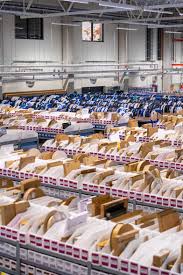
The second pillar is logistics. In the new model, not only those who “have the goods” win, but those who can quickly, predictably, and flawlessly convert stock into delivery. TME is developing its own warehousing and shipping facilities in Poland: a logistics center in Łódź with an area of about 19,500 m² and a center launched in 2022 in Rzgów with an area of 11,000 m² with plans to expand to 26,000 m². Automation and robotization of logistics translate into process efficiency and quality, as evidenced by, for example, 6410 packages completed without mistakes. In the context of the components market, such a number is not just an operational curiosity—fewer errors mean fewer downtimes, fewer complaints, and less risk that the wrong element will reach the production line.
Substitutes for Components – How to Maintain Production Continuity
The third pillar is substitutes. During shortages, the market has learned that a substitute is no longer just an addition to the offer, but one of the basic mechanisms for maintaining the continuity of projects and production. TME is developing a system of “similar products” that supports searching for alternatives at the catalog level. This is especially important when the lead time for the part originally indicated in the BOM becomes unacceptable or the risk of purchasing from an unauthorized source increases. Of course, the substitute alone does not solve everything—there is still a need for an assessment of compliance with parameters, applications, and risk—but a distributor who can quickly provide a sensible alternative realistically shortens the customer’s response time to disruption.
Managing Risk in the Supply Chain of Electronics
The fourth pillar is managing the risk of the supply chain. This area has advanced from the background to the center of purchasing decisions in recent years. Industrial customers today do not judge a distributor solely by price and delivery time, but also by the quality of the supply channel, the reliability of the origin of goods, the level of compliance, and operational resilience. In this regard, TME’s strengths include maintaining high warehouse stocks, positioning in the High Service/E-Catalog category, membership in ERAI, as well as certifications PN-EN ISO 9001:2015-10 and implementation of PN-EN ISO 14001:2015. This is complemented by formal compliance policies, covering issues such as sanctions and anti-corruption, which translates into the status of a “trusted channel,” which for many regulated and manufacturing industries becomes as important as the availability of goods itself.
Strategic Changes

Analysis of market behavior and persisting instability lead to clear conclusions—in a situation where the semiconductor sector is heading towards a value close to $1 trillion, and growth is concentrated in the most demanding segments and susceptible to local bottlenecks, the advantage will not belong only to those who have a wide catalog.
Those distributors who can close the entire cycle—from product data, through visibility of availability and terms, to safe substitution and compliance with quality and regulatory standards—will win. In other words, component distribution is becoming a service of managing technological continuity for the customer.
In this context, the role of TME becomes particularly clear. The distributor today goes beyond just selling components, also encompassing support in managing their availability and reducing risk. For customers, this means less uncertainty in a world where “availability” is no longer a binary category—summarizes Grzegorz Kobalczyk.

Source: TME (https://www.tme.com/in/en/news/events/page/77782/distributor-of-components-in-a-new-role-from-sales-to-managing-technology-availability/)