

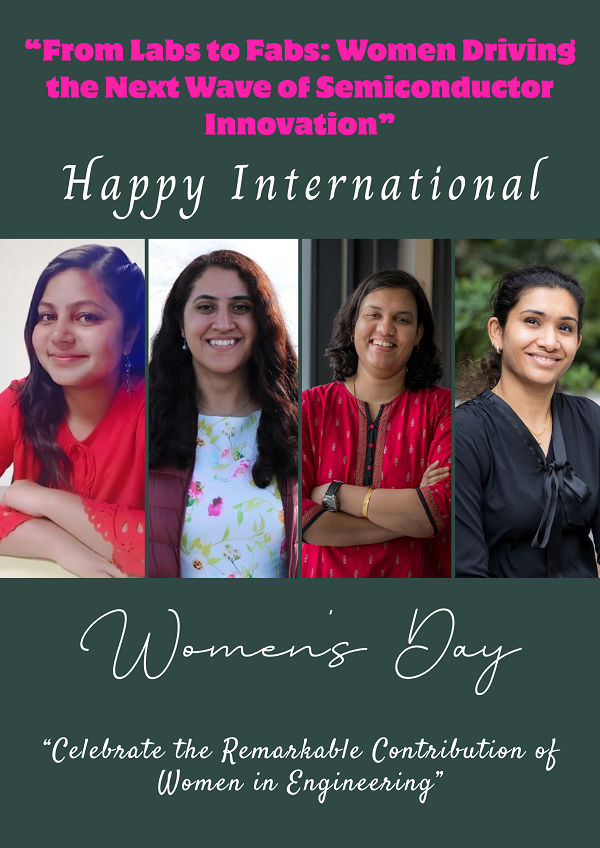

As the semiconductor industry accelerates toward enabling technologies such as artificial intelligence, high-performance computing, and advanced communications, women engineers and technology leaders are playing an increasingly influential role in shaping the ecosystem. Across global companies, women are contributing to complex chip design, manufacturing integration, materials engineering, and software development—areas that form the backbone of modern semiconductor innovation. Their growing presence highlights how diversity of thought, inclusive workplaces, and mentorship initiatives are helping the industry tackle some of the most challenging engineering problems while inspiring the next generation of women in STEM.
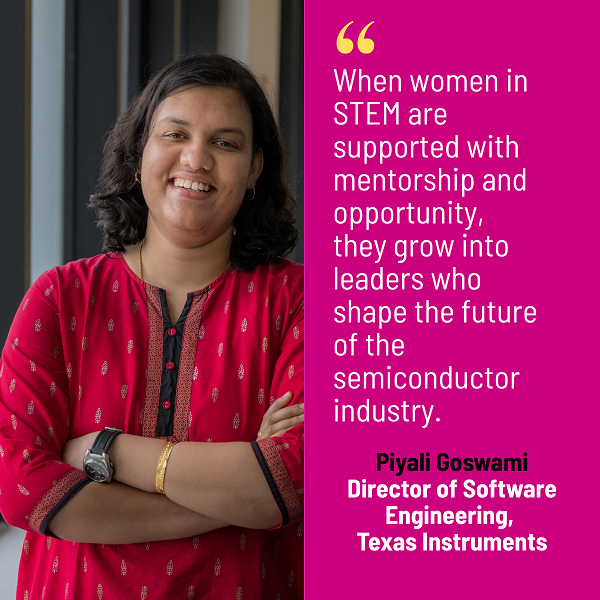


Piyali Goswami, Director of Software Engineering, Texas Instruments, believes innovation thrives when diverse voices are empowered to contribute. “Innovation accelerates when everyone can contribute their best work, and I’m constantly inspired by how women in STEM strengthen the way we solve complex challenges,” she says. Goswami emphasizes that meaningful mentorship and opportunities are essential for nurturing talent. She points to initiatives such as TI India’s WiSH (Women in Semiconductors and Hardware) program, noting that structured mentorship and supportive communities play a vital role in preparing women to take on leadership positions that will shape the future of the semiconductor industry.
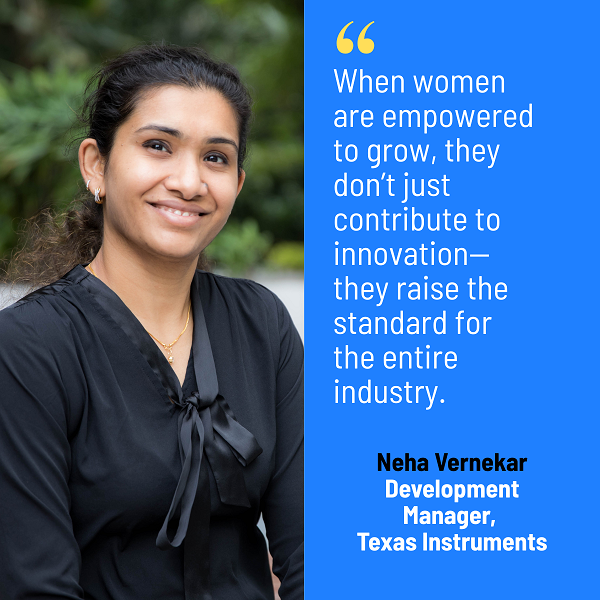
Echoing a similar sentiment, Neha Vernekar, Development Manager, Texas Instruments, highlights the importance of trust and responsibility in empowering women engineers. “Great innovation is built on the courage to question, learn, and lead. I’ve seen how women rise up when they’re trusted with real responsibility and surrounded by teams that value diverse thinking,” she says. According to Vernekar, STEM careers open powerful pathways for young women to solve real-world problems and develop technologies that impact millions of lives. She adds that the industry must continue building pathways that enable women not only to enter the field but also to stay, grow, and lead. “Be bold in your ambition, stay curious in your learning, and know that your perspective truly matters,” she advises young professionals.
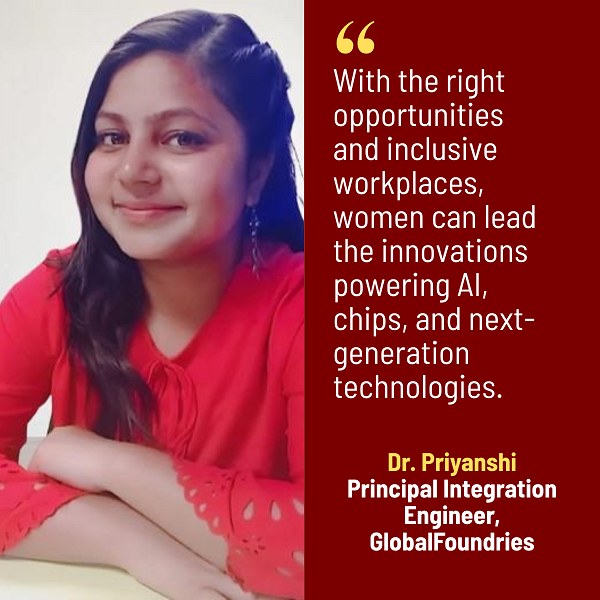
For Dr. Priyanshi, Principal Integration Engineer at GlobalFoundries, the transition from academic semiconductor research to manufacturing-scale engineering revealed the true complexity of chip production. She explains that while academia builds strong foundations in device physics, real semiconductor fabs require engineers to manage process variability, tool dependencies, and tight control over manufacturing conditions. Her role in the New Product Introduction team at GlobalFoundries focuses on bringing advanced fabrication technologies from development to production. By analyzing extensive electrical and process data correlations, she works to optimize trade-offs between performance, power, area, and cost. These improvements directly support the creation of high-performance chips used in AI computing, data centers, and next-generation communication systems. She also emphasizes that inclusive workplace cultures and flexible policies play a crucial role in enabling women engineers to thrive in deep-tech semiconductor roles. Reflecting on her journey from a small town to advanced semiconductor R&D, she encourages aspiring women engineers: background should never limit ambition—curiosity, persistence, and purpose can open doors to the world of chip innovation.
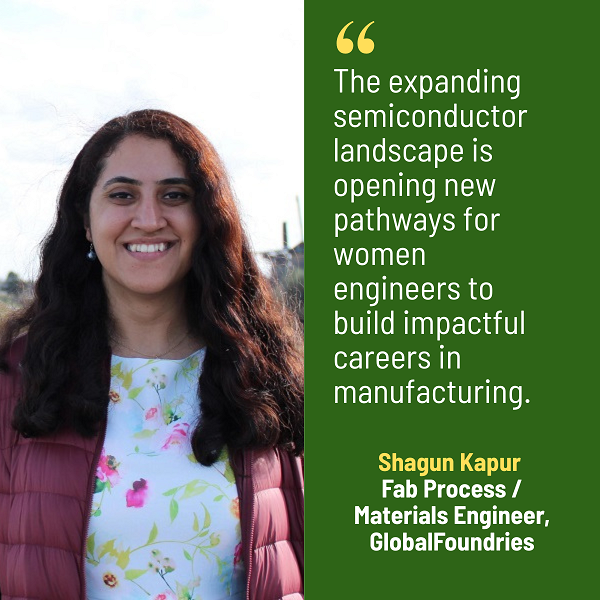
Similarly, Shagun Kapur, who remotely supports fabrication operations for GlobalFoundries from India, represents a new generation of engineers working within globally distributed semiconductor manufacturing networks. With a background spanning electronics and materials science research in the United States, she applies her expertise to real-time semiconductor process optimization by analyzing manufacturing data and identifying potential material or tool-related defects. She highlights how GlobalFoundries’ remote fab-support model enables engineers in India to monitor and support fabrication processes worldwide, providing continuous time-zone coverage and faster resolution of critical manufacturing challenges. According to Kapur, digital fabs and automation are transforming the semiconductor landscape, opening new opportunities for engineers in countries without large manufacturing facilities. She notes that with the rapid expansion of India’s semiconductor ecosystem—including OSAT facilities, fabs, and digital manufacturing—women engineers now have access to career paths that were once largely unavailable domestically. Her journey reflects a broader shift as India emerges as a key contributor to global semiconductor manufacturing.
Together, these voices illustrate how women are increasingly shaping the semiconductor industry—from research labs and software engineering teams to advanced fabrication technologies and global manufacturing operations. As organizations continue to foster inclusive cultures, mentorship programs, and leadership opportunities, women engineers are not only participating in the semiconductor revolution but actively driving it forward. Their contributions are helping define the technologies that power modern electronics and will continue to influence the future of the global chip ecosystem.