

Introduction
Near Field Communication (NFC) is a short-range wireless communication technology that enables devices to exchange data quickly, securely, and conveniently. NFC has become an essential feature in modern smartphones, tablets, laptops, payment systems, and smart devices. From contactless payments to instant data sharing, NFC technology simplifies everyday tasks while providing enhanced security compared to many other wireless communication methods.
What Is an NFC Sensor?
An NFC (Near Field Communication) sensor uses high-frequency wireless communication to transfer data between two NFC-enabled devices over a short distance, typically up to 10 cm (4 inches). NFC technology allows users to perform secure transactions, exchange information, and connect devices without complicated setup procedures. Compared to Bluetooth, NFC offers several advantages, including:


- Faster and easier device connection
- Lower power consumption
- Enhanced security
- Automatic communication initiation
- Reliable operation in crowded environments
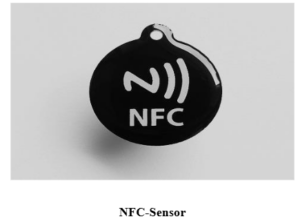

NFC enables smart devices such as smartphones, tablets, laptops, smartwatches, and payment terminals to communicate with other NFC-enabled devices. The technology is based on principles similar to RFID (Radio Frequency Identification) but operates over a much shorter range.
Because NFC communication occurs within a few centimeters, users must place their devices close to a contactless reader or another NFC-enabled device. NFC can also be used to transfer:
- Photos
- Videos
- Contact information
- Documents
- Website links
- Authentication credentials
Working Principle of NFC
Unlike Bluetooth, NFC does not require manual device discovery, pairing, or complex setup procedures. When two NFC-enabled devices come within approximately 4 inches (10 cm) of each other, a communication link is automatically established. This enables fast and seamless data exchange. The primary advantage of NFC over Bluetooth is its extremely short operating range, which significantly improves security and reduces the risk of unauthorized access.
NFC can also operate with passive devices that do not have their own power source, making it ideal for smart tags and contactless cards. NFC communication operates at a frequency of 13.56 MHz and supports data transfer rates of:
- 106 kbps
- 212 kbps
- 424 kbps
The type of data exchanged depends on the application and the operating mode being used.
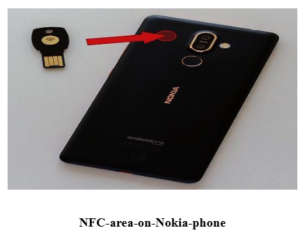

NFC Operating Modes
NFC technology supports three primary operating modes:
1. Peer-to-Peer Mode
Peer-to-peer mode is commonly used in smartphones and mobile devices. In this mode, two NFC-enabled devices communicate directly with each other to exchange information such as:
- Photos
- Videos
- Contacts
- Documents
- Links and files
Both devices actively participate in sending and receiving data.
2. Read/Write Mode
In read/write mode, an NFC-enabled device reads information from or writes information to an NFC tag. This mode is commonly used for:
- Smart posters
- Advertisement tags
- Product information systems
- Access control systems
- Automated device configuration
A smartphone can read data stored on an NFC tag and automatically perform predefined actions.
3. Card Emulation Mode
In card emulation mode, an NFC-enabled device behaves like a contactless smart card. This mode is widely used in:
- Mobile payment systems
- Public transportation cards
- Access control systems
- Digital ticketing solutions
Popular mobile payment platforms such as Apple Pay, Google Pay, and Samsung Pay utilize this mode to perform secure contactless transactions.
Is NFC Secure?
Many users are concerned about the security of mobile payments and wireless data transmission. Fortunately, NFC technology is considered highly secure and is generally more secure than traditional magnetic-stripe cards. One major reason is that NFC transactions use encrypted and dynamic data rather than static information.
Why NFC Is More Secure Than Magnetic Stripe Cards
Magnetic-stripe cards store fixed information that can potentially be copied by fraudsters. In contrast, NFC transactions use encrypted data that changes continuously during each transaction, making unauthorized duplication significantly more difficult.
Tokenization Technology
Modern mobile payment systems such as Apple Pay use a security mechanism called tokenization. The process works as follows:
- The user adds a credit or debit card to the mobile wallet.
- The card information is securely sent to the issuing bank or payment network.
- The bank replaces the actual card details with a randomly generated digital token.
- The token is stored on the device instead of the real banking information.
- During transactions, the token is used rather than the actual card number.
This ensures that sensitive banking information is never directly shared during payment transactions.
Biometric Authentication
Many NFC payment systems include additional security measures such as:
- Fingerprint authentication
- Face recognition
- Device PIN verification
- Secure hardware encryption
For example, Apple Pay requires biometric authentication or device verification before a transaction can be completed. As a result, even if a device is lost or stolen, unauthorized users cannot easily access payment information.
NFC-Based Payment Systems
Several popular contactless payment platforms use NFC technology, including:
- Apple Pay
- Google Pay
- Samsung Pay
- Contactless Credit Cards
- Tap-to-Pay Banking Cards
These payment methods offer convenience, speed, and enhanced security compared to traditional payment systems.
Applications of NFC Technology
NFC technology is used in a wide range of consumer, industrial, and commercial applications.
Common Applications of NFC Sensors
- Sharing passwords between NFC-enabled devices
- Transferring photos, videos, and contacts
- Android Beam and device-to-device communication
- Contactless mobile payments
- Smart ticketing systems
- Public transportation access cards
- Remote computer startup and automation
- Smart home control systems
- Wake-up and reminder automation using NFC tags
- Bluetooth speaker pairing
- Access control and security systems
- Product authentication and tracking
Advantages of NFC Technology
- Quick and automatic device connection
- Low power consumption
- Enhanced security through short communication range
- Simple user experience
- Reliable contactless transactions
- Support for passive NFC tags without batteries
- Wide compatibility with modern smartphones and smart devices
Conclusion
NFC technology has revolutionized short-range wireless communication by providing a fast, secure, and energy-efficient method for exchanging data. Whether used for contactless payments, device pairing, smart automation, or information sharing, NFC offers a seamless user experience with strong security features. As smartphones, smart devices, and digital payment systems continue to evolve, NFC sensors will remain a key technology driving the future of secure and convenient wireless communication.