

Introduction
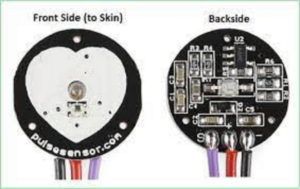

A pulse sensor is a device used to detect the heartbeat of a person. It measures the variations in blood flow and monitors changes in blood volume through the vessels.


How Pulse Monitoring Works
The human heart continuously pumps blood throughout the body. This pumping action creates blood flow in arteries, which must remain within a normal range for proper health. Monitoring this blood flow helps determine the heart rate, which is done using a pulse sensor.



The sensor is typically attached to a fingertip or earlobe of a person during activities such as walking, running, or even during medical procedures.
Working Principle
The pulse sensor works on the principle of light reflection or transmission. The variations in light caused by blood flow are detected and processed by the sensor circuit.
Structure of Pulse Sensor
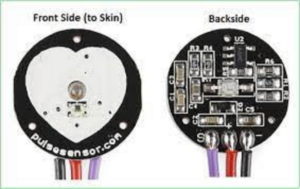

- Front Side: Contains an LED that emits light onto the skin (usually placed on a fingertip).
- Back Side: Contains circuitry that detects and processes the pulse signal.
The LED sends light into the skin. This light interacts with the blood flowing through the arteries. As blood volume changes with each heartbeat, the amount of reflected or transmitted light also changes. The internal circuit processes these light variations and converts them into electrical signals. These signals represent heartbeats. This method is known as the Photoelectric Pulse Wave Method.
Methods of Pulse Detection
1. Transmission-Type Method
In this method, light from the LED passes through the blood vessels and is detected on the opposite side.
- Used in medical-grade devices
- Provides accurate readings
2. Reflection-Type Method
In this method, light from the LED reflects off the blood vessels and is detected by the sensor on the same side.
- Commonly used in wearable devices
- Easy to implement
Applications
- Heart rate monitoring devices
- Fitness trackers and smartwatches
- Medical monitoring systems
- Patient monitoring during surgery
- Health and wellness applications
Conclusion
Pulse sensors are essential devices for monitoring heart activity. By using light-based detection methods, they provide an easy and effective way to measure heart rate and ensure proper health monitoring.