
Water has always played a central role in shaping societies and economies. In India today, however, access to clean and safe water is becoming one of the country’s most pressing concerns. Although India supports nearly 18% of the world’s population, it has access to only about 4% of global freshwater resources. Rapid urban growth, industrial expansion, and changing climate conditions are putting enormous pressure on the country’s water supply systems.

The issue is not limited to water scarcity alone. Water quality has now become an equally serious challenge. In several parts of India, groundwater contamination from arsenic, fluoride, industrial waste, and untreated sewage continues to threaten public health. Rivers, lakes, and underground water reserves are under increasing stress, making access to safe drinking water more difficult for millions of people.
For many years, water purification mainly depended on traditional filtration methods and chemical treatment systems. These technologies helped improve water safety, but most of them worked in a fixed and limited manner. They were not designed to respond quickly to changing water conditions or contamination levels in real time. As India’s water challenges continue to evolve, these conventional systems are no longer enough on their own.
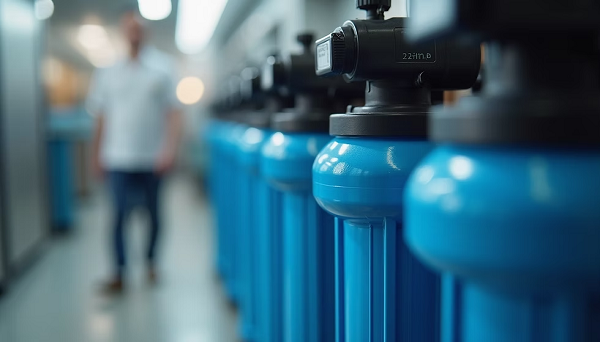
This is where electronics and smart technologies are beginning to make a major difference. Modern water purification systems are becoming more intelligent and connected. Instead of simply filtering water, they are now capable of monitoring quality, detecting problems, and automatically adjusting operations when needed. Sensors, automated controls, and digital monitoring systems are helping purification technologies become faster, smarter, and more reliable.
Advanced sensor systems today can track factors such as pH balance, turbidity, dissolved solids, temperature, and water flow in real time. If contamination levels rise or a system begins to malfunction, these technologies can identify the issue immediately and trigger corrective action before the problem worsens. This shift from reactive maintenance to predictive monitoring is especially important in a country as large and diverse as India.
The need for adaptable systems becomes even more important when considering India’s varying infrastructure conditions. A purification system installed in a major city operates under completely different conditions compared to one in a remote rural village where electricity supply and maintenance support may be limited. In many cases, technologies fail not because they are ineffective, but because they are not built to handle local realities. Reliable and practical systems are often more valuable than highly complex ones that are difficult to maintain.
Recognizing these challenges, the government has started focusing more on technology driven water management. Programs like the Jal Jeevan Mission have significantly expanded rural access to tap water connections across the country. Alongside improving access, authorities are also introducing digital monitoring systems, smart sensors, and automated operational tools to maintain water quality and improve efficiency.
Urban development initiatives such as the Smart Cities Mission and Atal Mission for Rejuvenation and Urban Transformation (AMRUT) are also encouraging the use of advanced technologies in water infrastructure. Cities are increasingly adopting smart meters, leak detection systems, automated treatment controls, and real time monitoring networks. Water management is gradually shifting from a purely mechanical setup to a digitally managed ecosystem.
Electronics is also helping make purification systems more sustainable. Traditional reverse osmosis systems (RO), for example, are often criticized for wasting large amounts of water and consuming high levels of energy. Newer electronically controlled technologies are improving water recovery rates, reducing waste, and optimizing purification cycles. Innovations such as UV-LED purification, electrochemical treatment, and intelligent filtration systems are making water treatment more energy efficient and environmentally friendly.
Artificial intelligence and IoT-based technologies are adding even greater capabilities. AI powered systems can analyze usage patterns, predict equipment failures, detect leaks, and reduce unnecessary energy consumption. In industrial sectors, smart systems are helping companies improve wastewater recycling and reduce dependence on freshwater supplies. These advancements are making water management more proactive and efficient.
At the same time, India’s growing digital economy is creating new water-related pressures. Industries such as data centres, semiconductor manufacturing, and electronics production require massive quantities of water for cooling and processing. As the country continues to expand its manufacturing and digital infrastructure, balancing industrial growth with sustainable water usage will become increasingly important.
Interestingly, the electronics sector itself may also provide solutions to many of these challenges. Smart recycling technologies, AI-driven monitoring systems, and digitally managed treatment models are helping industries reduce water consumption and improve efficiency. Many organizations are also integrating rainwater harvesting with digital monitoring systems to strengthen long term water resilience.
However, technology alone cannot solve India’s water problems. The long term success of water purification systems will depend on whether they can work effectively under real world conditions across villages, towns, industries, schools, and hospitals. The most successful solutions will not always be the most advanced. They will be the systems that are affordable, durable, energy efficient, and easy to maintain over time.
Ultimately, the future of water purification in India will depend on combining innovation with practicality. Electronics and smart technologies are transforming water purification from a simple filtration process into an intelligent and responsive system capable of monitoring, adapting, and optimizing continuously. But the true measure of success will not be how sophisticated the technology appears. It will be whether it can consistently provide safe, sustainable, and accessible water to millions of people across the country.
About Author

Devika Raj Batra, Tech Innovator, Founder Project Amrit, Data Sources Internet, Views are Personal). The author has earned recognition through a nomination for the Pradhan Mantri Rashtriya Bal Puraskar and has also filed two patent applications in her own name.