

Introduction
Speed monitoring is essential in motors, conveyors, elevators, and various industrial machines. The speed of motor-driven equipment can change due to several factors such as overload, underload, transmission component failure, belt slippage, or mechanical jamming. To prevent equipment damage and production losses, speed monitoring devices are used to detect abnormal operating conditions. In open-loop control systems, speed monitoring devices can generate alarms or shut down equipment automatically. In closed-loop control systems such as DC drives and Variable Frequency Drives (VFDs), speed feedback is necessary to ensure proper operation and control.
What is a Zero Speed Switch?
A Zero Speed Switch (ZSS), also known as a speed-actuated sensing switch, is a device used to monitor the rotational speed of a shaft, conveyor belt, or other moving equipment. It is widely used in industries such as power generation, cement manufacturing, sugar processing, paper mills, textile plants, and material handling systems.


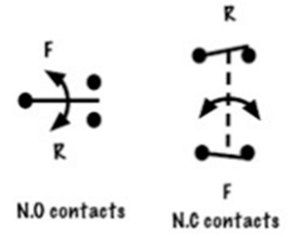


The primary function of a zero speed switch is to detect when equipment speed falls below a predetermined value or stops completely. When this condition occurs, the switch activates an alarm, relay, or shutdown mechanism to protect the machinery from damage. For example, in conveyor systems, the switch can stop operations if the conveyor belt slows down excessively or becomes jammed. Similarly, in motors, it can detect under-speed conditions and trigger protective actions.
Types of Zero Speed Switch Technologies
Zero speed switches operate using different sensing technologies, including:
- Electromechanical sensing
- Magnetic sensing
- Proximity sensing
- Electronic speed monitoring circuits
Electromechanical speed switches operate through mechanical movement that opens or closes contacts according to shaft speed. Electronic zero speed switches use sensors and relay-based or electronic control circuits to monitor speed more accurately and reliably.
Working Principle of a Zero Speed Switch
A zero speed switch consists mainly of two components:
- Sensor
- Controller
The sensor continuously monitors the rotational speed of a shaft or moving equipment. When the sensor detects a speed below the preset limit or complete stoppage, it sends a signal to the controller. The controller processes the received signal and performs the required action, such as:
- Activating an alarm
- Stopping the motor
- Shutting down equipment
- Triggering safety relays
Modern zero speed switches are available in waterproof, dustproof, and explosion-proof designs for operation in harsh industrial environments.
Important Specifications of a Zero Speed Switch
- Input shaft speed range
- Trip set-point adjustment
- Operating temperature range
- Operating voltage
- Relay contact rating
- Field adjustability
- Environmental protection rating
- Response time
- Sensor type
Zero Speed Switch Wiring and Operation
One common application of a zero speed switch is motor plugging, which is a method used to stop a motor rapidly by briefly applying reverse torque. In a plugging circuit, the zero speed switch is connected directly or indirectly to the motor shaft and operates using centrifugal force.
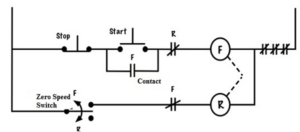

When the motor rotates, the switch contacts change state. During normal operation, the motor runs continuously through a standard start-stop control circuit. When the stop button is pressed:
- The forward contactor is de-energized.
- The motor continues rotating briefly due to inertia.
- The zero speed switch detects shaft movement.
- The reverse contactor is momentarily energized.
- The reverse torque quickly stops the motor.
- Once the shaft stops, the zero speed switch opens and de-energizes the reverse circuit.
This method provides fast stopping without allowing the motor to accelerate in the reverse direction.
Features of a Zero Speed Switch
- Non-contact speed sensing.
- Adjustable speed set points.
- Built-in time delay bypass system.
- Dustproof and waterproof construction.
- Suitable for harsh industrial environments.
- Accurate speed monitoring.
- Relay output for alarms and control systems.
- Minimal maintenance requirements.
Advantages of a Zero Speed Switch
- Easy speed setting and adjustment.
- Protects machinery from damage caused by under-speed or stoppage.
- Uses non-contact sensing technology.
- Reduces maintenance costs and downtime.
- No roller wear or alignment issues.
- Supports speed monitoring from 1 RPM to 5000 RPM or more.
- Operates effectively in dusty, wet, oily, and chemical environments.
- Can monitor speed and direction from multiple locations.
- Contains no moving mechanical parts, increasing reliability.
- Provides long service life with minimal maintenance.
Disadvantages of a Zero Speed Switch
- A bypass arrangement may be required during machine startup.
- Temporary speed fluctuations can cause unwanted tripping if not properly configured.
- Additional time-delay circuits may be required.
- Initial installation cost may be higher than basic monitoring methods.
- Speed variations caused by overloads or mechanical faults can affect operation.
Applications of Zero Speed Switches
1. Conveyor Systems
Zero speed switches are extensively used to monitor conveyor belt speed and detect belt slippage, stoppage, or mechanical failures.
2. Industrial Machinery
They are used in rolling mills, crushers, mixers, stirrers, and rotating equipment to ensure safe and reliable operation.
3. Motor Protection Systems
These switches provide under-speed, over-speed, and zero-speed protection for electric motors.
4. Manufacturing Industries
Widely used in cement plants, paper mills, textile factories, fertilizer plants, and sugar industries.
5. Thermal Power Plants
Zero speed switches monitor conveyors, feeders, and rotating machinery in power generation facilities.
6. Mining Industry
Used in coal mines and material handling systems to monitor conveyor and crusher operation.
7. Food Processing Industry
These switches ensure reliable operation of mixers, conveyors, and processing equipment.
8. Hazardous Environments
Explosion-proof and wash-down versions are suitable for chemical plants, food industries, and hazardous locations.
Conclusion
A Zero Speed Switch is an important industrial safety and monitoring device used to detect under-speed and zero-speed conditions in motors, conveyors, and rotating machinery. By continuously monitoring equipment speed and triggering protective actions when abnormal conditions occur, it helps prevent equipment damage, reduce downtime, and improve operational reliability. Due to its accuracy, durability, and ability to function in harsh environments, the zero speed switch remains an essential component in modern industrial automation and protection systems.