
Introduction
The 360 Degree Laser Range Scanner is an advanced distance-measuring device widely used in robotics, mapping, and industrial applications. In recent years, 360-degree laser scanners and laser levels have gained significant popularity due to their high precision and ability to scan an entire surrounding area without repositioning the device.
The system performs a 2D 360-degree scan with a range of up to 40 meters. The generated 2D point cloud data can be used for mapping, localization, object detection, and environmental modeling.
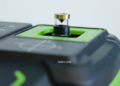
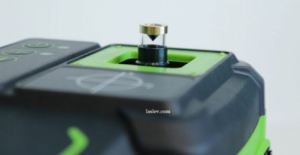
The scanning frequency reaches 5.5 Hz when sampling 360 points per rotation and can be configured up to 10 Hz maximum. The unique design of the prism that receives the concentrated laser beam plays a key role in its performance and accuracy.
Advantages of 360° Laser Range Scanners
Laser scanners with 360° coverage offer several advantages compared to traditional systems with limited beam length.
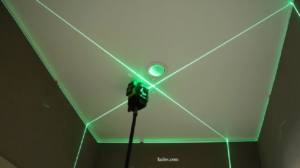
- Full 360° Closed Plane: Enables accurate marking or scanning around the entire perimeter without rotating the device.
- High Visibility: Once powered on, the full scanning range becomes immediately visible.
- Close-to-Surface Projection: The laser plane can be positioned very close to the wall, floor, or ceiling.
- Faster Marking Tasks: Suitable for plastering, ceiling installation, flooring, door installation, and partition alignment.
- Efficient Workflow: Reduces setup time and improves overall productivity.
Such features allow professionals to complete alignment and measurement tasks more quickly and conveniently.
Disadvantages of 360° Laser Scanners
Like all equipment, 360-degree laser scanners also have some limitations:
- Higher Cost: Models with 3×360° or 4×360° optical configurations are generally more expensive than basic 2D laser systems.
- Uneven Brightness: The laser line may not have uniform brightness throughout the full 360° circle.
- Thicker Laser Line: Some cone prism models may produce a thicker beam due to prism coating quality.
These minor drawbacks are common across most models, regardless of price range.
Types of 360° Laser Scanners
1. Cone Prism Models
These models typically feature 3D or 4D laser configurations with protective towers. They may include:
- Mechanical (pendulum-based) compensators
- Electronic compensators for higher precision
They are widely used for high-accuracy industrial and construction applications.
2. Cylindrical Prism Models
These models use multiple prisms and emitters arranged around the perimeter to create a closed horizontal plane. Typically:
- 3–4 emitters generate the horizontal plane
- 2 emitters generate the vertical plane (usually interrupted under the device)
Due to multiple emitters, these devices are generally larger and heavier. They may also use either simple magnetic pendulum compensators or advanced electronic compensators.
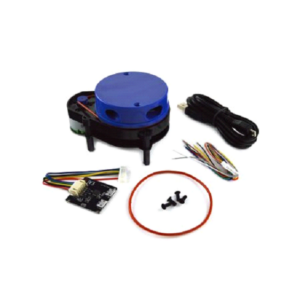
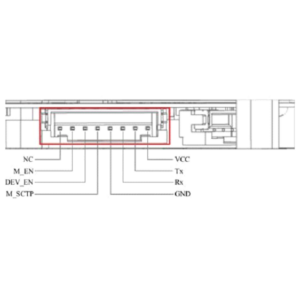
Pin Configuration
- VCC – Power Supply (5V)
- Tx – Data Output
- Rx – Data Input
- GND – Ground
- M_EN – Motor Enable Control (3.3V)
- DEV_EN – Ranging Enable Control (3.3V)
- M_SCTP – Motor Speed Control (1.8V)
- NC – Reserved Pin
Technical Features
- 360-degree omnidirectional distance measurement
- Small measurement error with stable performance
- High accuracy distance detection
- Measuring range: 0.12 m to 10 m
- Strong resistance to ambient light interference
- Industrial-grade motor drive for stable operation
- Laser safety class: Class I
- Adaptive scanning frequency: 6–12 Hz
- Range finder frequency: 5000 measurements per second
Applications
- Robot navigation and obstacle avoidance
- ROS-based robotics research and teaching
- Regional security monitoring
- Environmental scanning and 3D reconstruction
- Home service robots and robotic vacuum navigation
- Autonomous mapping systems
Conclusion
The 360 Degree Laser Range Scanner is a powerful and precise scanning solution designed for robotics, automation, mapping, and industrial applications. With high scanning speed, stable performance, and full 360° coverage, it provides accurate environmental data essential for modern intelligent systems.