
Introduction to Morse Code
Morse code is a well-known method of communication that uses a series of dots and dashes to represent letters, numbers, and symbols. For more than a century, it was widely used in telegraph systems and radio communications.
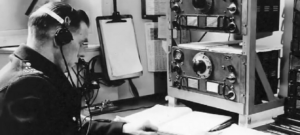

Today, Morse code is used much less than before, but it is still found in amateur radio bands, radio beacons, and emergency communication systems. Many radio services continue to train users in Morse code as a backup communication method.
Development of Morse Code
Morse code was invented in the mid-nineteenth century by Samuel Morse and his associates. It was originally developed for use with the telegraph system, and it became known as the Morse telegraph.
This system was the first widely used method of transmitting messages over long distances. It was simple, reliable, and adaptable, which allowed it to become a worldwide communication standard.
Later, when wireless and radio communication were introduced, Morse code became an important part of radio transmissions due to its simplicity and efficiency.
Morse Code Explained
Morse code represents characters using two basic elements: the dot and the dash. Different combinations of these two elements represent letters, numbers, and special symbols.
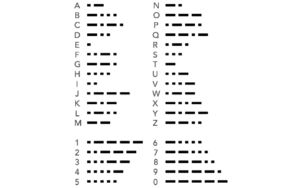
Table of Morse code characteristics : letters & numbers
Messages are sent by turning a signal on and off in the correct pattern to represent the dots and dashes. In telegraph systems, this was done using electrical pulses over a wire. In radio communication, the transmitter signal is switched on and off.
For example, the Morse code for the letter A is:
A = dot dash (di-dah)
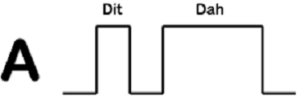
Length of Morse Code Elements
For Morse code to be easily understood, the timing of dots, dashes, and spaces must follow standard rules.
- A dot has a duration of one unit.
- A dash has a duration of three units.
- The space between elements of the same letter is one unit.
- The space between letters is three units.
- The space between words is seven units.
Morse Keys
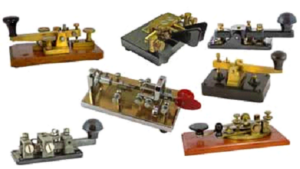
Different types of Morse keys are used to send Morse code. These devices create the electrical signals needed to form dots and dashes.
Straight Morse Key
The straight key is the traditional Morse key. It uses an up-and-down lever motion to make and break contact, producing dots and dashes. It was the first type of Morse key used.
Mechanical Semi-Automatic Keyer
This key was developed to reduce operator fatigue, commonly known as repetitive strain injury. When the key is moved in one direction, it produces dashes, and in the other direction, it produces automatic dots using a vibrating mechanism. The Vibroplex is a well-known example of this type.
Electronic Keyer
An electronic keyer is an advanced version of the mechanical key. It uses electronic circuits to generate dots and dashes automatically. Many modern keyers use two paddles, allowing alternate dots and dashes to be produced. These are known as iambic keyers.
Applications of Morse Code
Historical Applications
- Telegraph communication over long distances.
- Radio communication in early wireless systems.
- Ship-to-ship communication using flashing lights.
Modern Applications
- Amateur (ham) radio communication.
- Emergency and backup communication systems.
- Radio beacons and signal identification.
- Military and intelligence training.
Advantages of Morse Code
Simplicity
Morse code is simple to learn and use. The equipment required is minimal, making it ideal for amateur radio operators and emergency communication.
Low Bandwidth Requirement
Morse code uses very little bandwidth. This allows many stations to operate in a small frequency range and reduces interference. Morse signals can often be received even when they are weaker than the surrounding noise.
International Communication
Morse code uses standard abbreviations and formats. This allows operators from different countries to communicate effectively, even if they do not share a common spoken language.
Conclusion
Morse code is one of the oldest and most reliable communication methods. Despite the rise of modern digital communication systems, it continues to be used in amateur radio, emergency systems, and training programs. Its simplicity, reliability, and low bandwidth requirements ensure that Morse code remains relevant even after more than 150 years of use.