
AC Capacitance and Capacitive Reactance – Working Principle with Sinusoidal Supply
Introduction Electrical charge is a form of energy that capacitors store on their conducting plates. The voltage applied across the...



Introduction Electrical charge is a form of energy that capacitors store on their conducting plates. The voltage applied across the...
Introduction A resonant circuit is formed using resistance (R), inductance (L), and capacitance (C), and it exhibits a frequency-dependent response...
Introduction A parallel resonance circuit consists of a resistance (R), an inductance (L), and a capacitance (C) connected in parallel....
Introduction The abbreviation RMS stands for Root Mean Square. It is also known as the effective value or heating value...
Introduction Whether it is a sine wave, square wave, or triangular wave, the average voltage (or average current) of a...
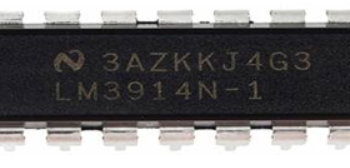
Introduction The LM3914 is an integrated circuit designed by National Semiconductor for visual display of the magnitude of an analog...
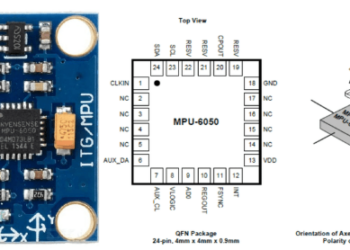
Introduction The MPU6050 is a Micro-Electro-Mechanical System (MEMS) sensor that combines a three-axis accelerometer and a three-axis gyroscope into a...
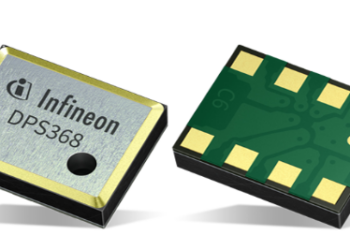
Introduction The DPS368 is a compact sensor device capable of measuring both temperature and pressure. It is designed to be...
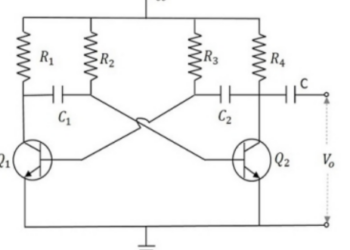
Introduction An astable multivibrator is a free-running oscillator that continuously alternates between two unstable states without the need for any...
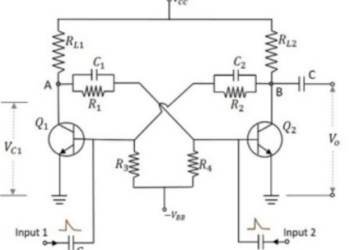
Introduction Multivibrator circuits are classified into three types: monostable, astable, and bistable. A bistable multivibrator operates like a pulse detector....




Semiconductor For You is a resource hub for electronics engineers and industrialist. With its blend of
technology features, news and new product information, Semiconductor For You keeps designers and
managers up to date with the fastest moving industry in the world.