
Semiconductor for You
  • Home
  • Semiconductor News
  • Semiconductor Magazine
  • Technology
    • Automotive
    • Consumer Electronics
    • IoT
    • Lighting
    • Power Management
    • Wireless
    • Personal Electronics
    • Hardware & Software
    • Research
    • Medical Electronics
    • Embedded Design
    • Aerospace & Defence
    • Artificial Intelligence
  • Interview
  • Industries
  • Market
  • Knowledge Base
  • Events
  • Tools
    • Resistor Color Code Calculator
No Result
View All Result
  • Home
  • Semiconductor News
  • Semiconductor Magazine
  • Technology
    • Automotive
    • Consumer Electronics
    • IoT
    • Lighting
    • Power Management
    • Wireless
    • Personal Electronics
    • Hardware & Software
    • Research
    • Medical Electronics
    • Embedded Design
    • Aerospace & Defence
    • Artificial Intelligence
  • Interview
  • Industries
  • Market
  • Knowledge Base
  • Events
  • Tools
    • Resistor Color Code Calculator
No Result
View All Result
Semiconductor for You
No Result
View All Result
Home Knowledge Base

Digital 360° Tilt Sensor for Arduino: Working Principle, Features and Applications

Komal Ganvir by Komal Ganvir
March 6, 2026
in Knowledge Base
0

Understanding Tilt Sensors

A tilt sensor is a device used to detect orientation or inclination. It measures the angle or tilt of an object relative to gravity and converts this movement into an electrical signal. For example, at events such as major aviation shows, pilots perform complex aerial maneuvers to demonstrate the capabilities of their aircraft. In such advanced systems, tilt sensors play an important role in monitoring the horizontal and vertical inclination of the aircraft. This helps the pilot understand the position of the aircraft and respond effectively to obstacles during flight.
Tilt sensors are a type of transducer that generate an electrical signal proportional to the degree of inclination relative to one or more axes. Because of this capability, they are widely used in modern electronic systems. These sensors are commonly used in many applications such as:

  • Off-road vehicles
  • Portable electronic devices
  • Robotics systems
  • Aviation instruments
  • Industrial automation systems

What is a Sensor?

A sensor is a device that detects changes in the environment and responds by producing an electrical signal. Sensors can detect various types of environmental inputs such as heat, light, motion, pressure, temperature, and moisture.

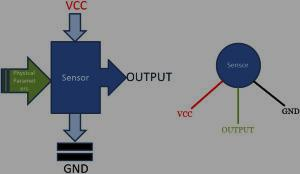
Most sensors have three main terminals:

  • VCC – Used to supply power to the sensor
  • GND – Provides the ground or reference voltage
  • Output – Produces the signal generated by the sensor

Some sensors provide analog output, while others provide digital output. In certain cases, sensors may include multiple output terminals depending on the application.

What is the Digital 360° Tilt Sensor for Arduino?

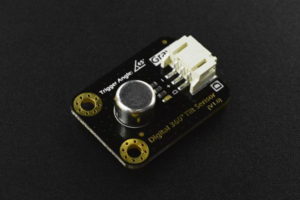
The Digital 360° Tilt Sensor is a simple orientation detection module commonly used with Arduino and other microcontrollers. Inside the sensor is a small metal ball that moves along a specially designed internal structure. When the sensor is tilted, the metal ball shifts due to gravity and either completes or breaks an electrical connection. Because of this mechanism, the sensor acts as a simple tilt switch.

This sensor can easily be connected to an Arduino expansion board to create interactive projects such as motion-based devices and tilt controlled systems. Unlike traditional steel ball tilt switches that detect tilt only in one direction, this sensor uses a cylindrical internal design that allows it to detect tilt in all directions (360°).
Features

  • Compatible with both 3.3V and 5V systems
  • 360° inclination detection
  • High sensitivity trigger response
  • Supports graphical programming platforms such as Mind+
  • Easy to interface with Arduino and other microcontrollers

Specifications

  • Working Voltage: 3.3V – 5V
  • Communication Type: Digital
  • Connector Type: Gravity
  • Tilt Switch Angle: 45° ±10°
  • Module Size: 22 × 30 mm (0.87 × 1.18 inches)

Applications

  • Educational experiments for tilt detection
  • Arduino and robotics projects
  • DIY electronic toys
  • Motion-activated devices
  • Orientation detection systems
Content Protection by DMCA.com
Tags: Digital 360° Tilt Sensor for Arduino
Komal Ganvir

Komal Ganvir

Browse by Category

  • Aerospace and Defence
  • Articles
  • Automotive
  • Consumer-Electronics
  • Hardware & Software
  • Interview
  • IoT
  • Knowledge Base
  • Lighting
  • Market
  • personal-electronics
  • Power Management
  • Research
  • Semiconductor Events
  • Semiconductor News
  • Technology
  • Wireless
Semiconductor for You

Semiconductor For You is a resource hub for electronics engineers and industrialist. With its blend of
technology features, news and new product information, Semiconductor For You keeps designers and
managers up to date with the fastest moving industry in the world.

Follow Us

Browse by Category

  • Aerospace and Defence
  • Articles
  • Automotive
  • Consumer-Electronics
  • Hardware & Software
  • Interview
  • IoT
  • Knowledge Base
  • Lighting
  • Market
  • personal-electronics
  • Power Management
  • Research
  • Semiconductor Events
  • Semiconductor News
  • Technology
  • Wireless

Recent News

Digital fabs are opening new doors for women engineers in semiconductor manufacturing

Digital fabs are opening new doors for women engineers in semiconductor manufacturing

March 6, 2026
When women are given equal opportunities, they don’t just participate in deep tech—they lead innovation

When women are given equal opportunities, they don’t just participate in deep tech—they lead innovation

March 6, 2026
  • About
  • Advertise
  • Privacy & Policy
  • Contact

© 2022 Semiconductor For You

No Result
View All Result
  • Home
  • Semiconductor News
  • Technology
    • IoT
    • Wireless
    • Power Management
    • Automotive
    • Hardware & Software
  • Market
  • Interview
  • Knowledge Base
  • Tools
    • Resistor Color Code Calculator

© 2022 Semiconductor For You