
Introduction
Web technology has advanced significantly, enabling data to be transferred between devices within seconds. With the growing popularity of social networking platforms, people across the world share millions of photos, videos, and files every day. Email has long been one of the most common methods of data communication. It allows users to share links, images, documents, and other content easily. Today, these features are not limited to computers—they are also available on smartphones, smart TVs, and e-readers, making communication more convenient than ever.
Need for Faster Data Transfer
Many individuals use multiple devices such as smartphones, laptops, and tablets. For example, a user may want to transfer a file from their mobile phone to a laptop for better viewing or editing. Traditional methods of data transfer include:
- Uploading files to an intermediate server and downloading them on another device
- Using USB drives
- Burning data onto CDs or DVDs
Although these methods are useful, they can be time-consuming and inconvenient. This created the need for a faster and more efficient solution.
What is Point and Paste Technology?
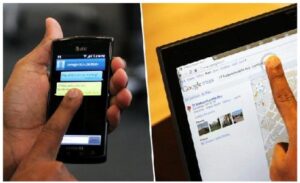
Point and Paste
Point and Paste technology is an innovative method that allows users to transfer data between devices simply by touching them. This concept was developed by researchers at the Massachusetts Institute of Technology (MIT) and is known as SPARSH. SPARSH enables quick data transfer between multiple devices using cloud-based communication. It eliminates the need for cables, external storage devices, or manual uploads.
How SPARSH Works
SPARSH uses the human body as a medium for initiating data transfer. The process works as follows:
- Touch the file (e.g., photo or video) on the source device
- Move to the destination device
- Touch the destination device screen
The selected file is instantly transferred and displayed on the target device. In reality, the data is temporarily stored in a cloud service such as an FTP server or Dropbox. When the user touches the second device, the data is retrieved from the temporary storage and transferred to that device.
Features of Point and Paste Technology
- Fast and efficient data transfer
- No need for cables or external storage
- Easy to use with simple touch interaction
- Works across multiple devices
- Cloud-based data handling
Applications
- Sharing photos and videos between smartphones and laptops
- Transferring files in offices and workplaces
- Educational environments for quick data sharing
- Personal use for seamless device connectivity
Future Scope
The SPARSH technology has been successfully tested on smartphones and laptops. In the future, it is expected to be integrated into operating systems of various devices, making data transfer even more seamless and intuitive.
Conclusion
Point and Paste technology represents a significant advancement in data transfer methods. By simplifying the process and reducing the time required, it enhances user experience and productivity. As technology evolves, such innovations will play a key role in connecting devices effortlessly.