

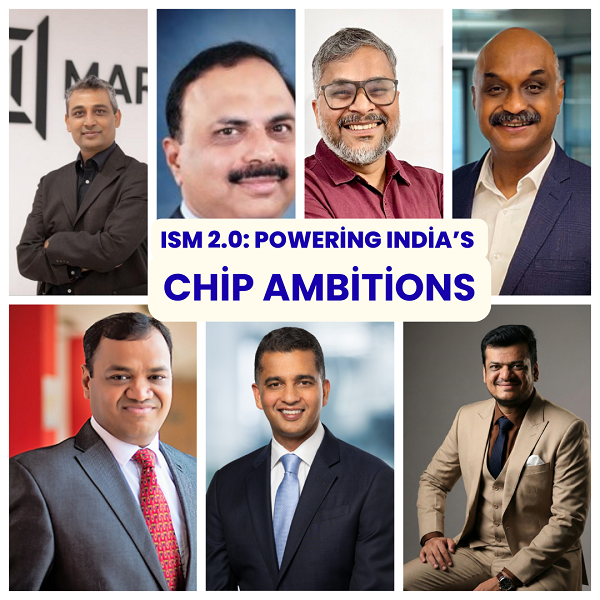
Union Budget 2026 positions semiconductors as national infrastructure, accelerating India’s shift from design hub to full-stack ecosystem player
Union Budget 2026 has reinforced India’s semiconductor ambitions with the launch of ISM 2.0, signalling a decisive move from policy intent to ecosystem execution. With expanded incentives, stronger design-to-manufacturing integration, and supply-chain localisation, the initiative aims to accelerate domestic chip capabilities, attract global partnerships, and anchor India firmly in strategic semiconductor value chains.
Budget 2026: ISM 2.0 marks India’s semiconductor inflection point
India’s semiconductor strategy received a major reset in Union Budget 2026 as Finance Minister Nirmala Sitharaman announced the next phase of the India Semiconductor Mission (ISM 2.0). The initiative expands incentives across design, manufacturing, materials, and ecosystem infrastructure, positioning semiconductors as strategic national capability rather than a niche industrial sector.
The renewed push comes at a time when global semiconductor supply chains are being reconfigured amid geopolitical shifts, AI-driven demand, and electrification trends. India—already a global design powerhouse—now aims to deepen capabilities across fabrication support, packaging, materials, and indigenous intellectual property.
Budget 2026 complements ISM 2.0 with expanded allocations for electronics components manufacturing, cluster-based infrastructure, and supply-chain localisation. Together, these measures seek to move India from value-chain participation to value-chain ownership. Industry leaders widely view this phase as the transition from announcements to execution, where speed, coordination, and ecosystem depth will determine success.
A key differentiator of ISM 2.0 is its full-stack approach: linking design innovation, manufacturing readiness, advanced materials, and talent pipelines. This aligns with India’s strengths in engineering services while addressing historical gaps in fabrication support and semiconductor-grade supply chains.
The policy also recognises sectoral opportunities where India can scale fastest—power electronics, automotive semiconductors, industrial automation, renewable energy, and AI infrastructure. These domains combine strong domestic demand with global growth, enabling India to build competitive niches rather than replicate leading-edge logic fabs.
Ultimately, ISM 2.0 reflects a strategic shift: semiconductors are no longer treated merely as electronics inputs but as foundational digital infrastructure underpinning energy transition, mobility, and computing. If execution matches ambition, Budget 2026 could mark the decade in which India transitions from the world’s design partner to a globally trusted semiconductor ecosystem hub.
Industry Perspectives on ISM 2.0
Mr. Suman Narayan, Chief Executive Officer, Cyient Semiconductors
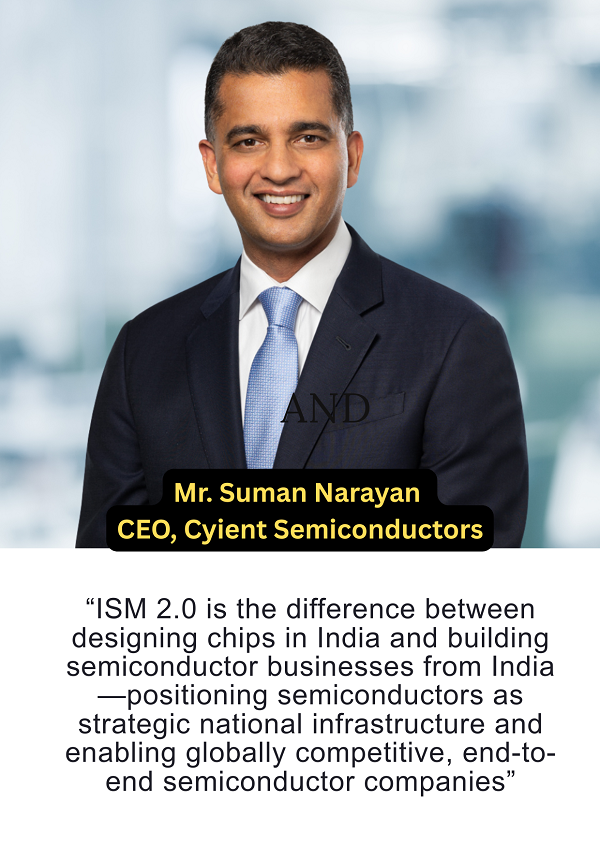
ISM 2.0 is widely seen as transformative for India’s semiconductor startups and mid-sized firms. Industry leaders note that the initiative moves the country from being primarily a chip-design destination to a location where complete semiconductor businesses can be built end-to-end. The emphasis on advanced technology targets, industry-led R&D, talent development, and supply-chain resilience gives emerging firms confidence to compete globally. Experts expect rapid momentum in electronics components, sub-assemblies, tooling, equipment support, and semiconductor materials—areas where India already has domestic linkages and where ISM 2.0 removes long-standing bottlenecks. Equally significant is the focus on proprietary chip IP and product innovation, enabling a shift from service-led design to globally marketed semiconductor products. However, execution speed remains critical. Industry stresses that approvals, infrastructure readiness, customs facilitation, and centre–state coordination must progress in parallel to translate policy into outcomes.
Navin Bishnoi, India Country Manager and AVP at Marvell India
Multinational semiconductor firms see ISM 2.0 as reaffirming India’s long-term ambitions while signalling a shift from foundational intent to accelerated ecosystem execution. India already plays a critical role in global chip design and innovation, particularly for complex SoCs and data-infrastructure technologies. Leaders expect semiconductor design and R&D to see the fastest momentum under ISM 2.0, leveraging India’s deep engineering talent and strengthening advanced packaging capabilities. Execution speed and policy consistency remain decisive, alongside coordination, talent development, and industry–academia collaboration.
Mr. Vinay Shenoy, Managing Director – Infineon India
Global semiconductor companies view ISM 2.0 as a strong signal that India intends to build a comprehensive semiconductor ecosystem rather than focusing narrowly on fabrication. Experts point out that India’s opportunity extends beyond leading-edge logic into power semiconductors, automotive electronics, industrial automation, renewable energy, and AI data-centre power conversion—segments aligned with domestic demand and engineering strengths. The initiative’s emphasis on materials, equipment, packaging, testing, and device engineering is expected to generate multiplier effects across EMS, speciality chemicals, semiconductor materials, PCB ecosystems, and embedded design services. However, semiconductor investments operate on long cycles and high capital intensity, so global partners will closely watch execution discipline.
Sanjay Gupta, India Country Head & Chief Development Officer at L&T Semiconductors Technology
For fabless and design-focused players, ISM 2.0 is viewed as a strategic inflection point shifting India from ecosystem participation to value-chain ownership. Observers highlight that the policy’s focus on indigenous IP, design capabilities, and industry-led R&D directly addresses constraints that have limited Indian fabless firms from scaling globally. Rapid momentum is expected in chip design and IP creation, advanced materials and equipment manufacturing, and talent development—three pillars that together create a competitive ecosystem difficult to replicate. Stakeholders stress the need for tight integration between R&D centres and commercial companies so that research outputs translate into products.
Nikul Shah, Co-Founder and CEO of IndieSemiC Pvt Ltd
From the perspective of fabless and ecosystem players, ISM 2.0 represents a timely step toward making India a serious participant across semiconductor design, manufacturing, and supply chains. Stakeholders highlight that India’s semiconductor market is expected to more than double by 2030, making sustained policy support essential. The Budget’s increased allocation for electronics components manufacturing and continued incentives for semiconductor projects are expected to accelerate packaging, testing, substrates, and supply-chain segments, which require lower capital than fabs and can scale faster. Approved semiconductor proposals involving large investments are also expected to catalyse OSAT, ATMP, and materials ecosystems. However, incentives alone are insufficient; rapid approvals, infrastructure readiness, and single-window clearances are essential to avoid cost escalations in capital-intensive projects. Skill-development programmes linked to industry and cluster-based ecosystems integrating design firms, OSAT players, and suppliers are seen as key accelerators.
Sanjeev Keskar, Chief Executive Officer, Arvind Consultancy
Industry experts emphasise that recent Budget announcements strengthening the Electronics Component Manufacturing Scheme (ECMS) complement the forthcoming ISM 2.0 by reinforcing localisation across passive components, bare PCBs, and semiconductor capital equipment. Observers note that building domestic manufacturing depth in these foundational segments will reduce import dependence and create upstream support for semiconductor fabs. Looking ahead, stakeholders expect ISM 2.0 to prioritise display and compound semiconductor fabs alongside power electronics technologies such as GaN, SiC, analog ICs, and discrete semiconductors—domains aligned with India’s market demand and engineering base. Experts caution against pursuing leading-edge sub-10 nm nodes prematurely, instead advocating stronger investment in analog, power, and embedded electronics design capabilities where India can achieve faster global competitiveness. They also highlight that increased allocation toward design innovation and VLSI-driven product development could deliver greater long-term value than purely incentive-led manufacturing schemes.
Srinivasa Gupta, CEO, Silicon Patterns
From the perspective of indigenous IP and design ecosystem players, ISM 2.0 represents a structural shift from fabrication-centric foundations toward high-value silicon innovation and productisation. Industry leaders describe the initiative as enabling India to transition from outsourced engineering to sovereign semiconductor creation, supported by indigenous IP development and advanced-node ambitions. Rapid momentum is expected in custom silicon and domain-specific architectures for AI, edge computing, and automotive applications, reflecting global demand for specialised chips. Equally transformative is the anticipated rise of a domestic semiconductor IP marketplace, where local firms develop and license foundational design blocks, reducing dependence on overseas IP providers. Stakeholders stress that execution must focus on bridging design and manufacturing access—ensuring Indian fabless companies obtain prototyping and production pathways—and on standardising IP interoperability frameworks to integrate fragmented domestic innovation into globally competitive SoC solutions.