
Infineon Technologies, in collaboration with the Ministry of Electronics and Information Technology (MeitY), organised a two-day workshop titled “Semiconductors – A Key Enabler for Viksit Bharat 2047: From Vision to Reality” on 12–13 January 2026 in New Delhi. The event brought together senior government officials, industry leaders, academic institutions and ecosystem stakeholders to discuss India’s semiconductor roadmap, policy priorities and talent development strategies.
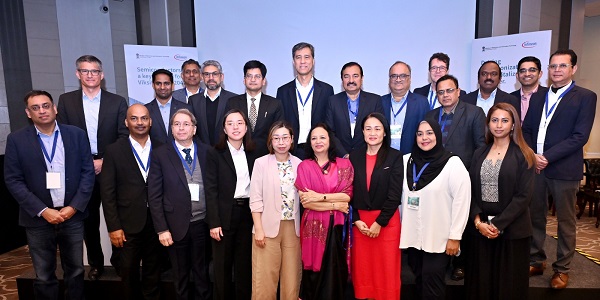
The workshop was inaugurated by Shri S. Krishnan, Secretary, MeitY, who underscored the strategic importance of semiconductors in achieving India’s long-term development goals. He highlighted the role of semiconductors in enabling digital infrastructure, advanced manufacturing, electric mobility, artificial intelligence and emerging technologies, and stressed the need for sustained collaboration between government, industry and academia to build a globally competitive ecosystem.
India’s Expanding Role in the Global Semiconductor Value Chain
Delivering the welcome address, Mr C.S. Chua, President and Managing Director, Infineon Technologies Asia Pacific Pte Ltd, outlined India’s growing significance in the global semiconductor landscape and Infineon’s long-term engagement with the country.
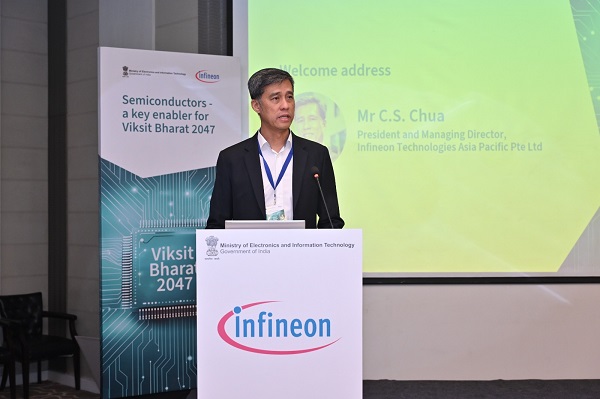
Mr Chua said semiconductor innovation requires aligned ecosystems, strong public–private partnerships and a long-term approach. He noted that India’s talent base, expanding market and entrepreneurial ecosystem present opportunities not only in manufacturing, but also in research, design and application-driven innovation addressing global challenges such as decarbonisation and digitalisation.
He acknowledged the policy support and vision provided by the Government of India in strengthening domestic capabilities and attracting investment. According to him, discussions during the first day of the workshop—covering technology trends, policy frameworks and commercial considerations—highlighted the importance of ecosystem-wide alignment to accelerate industry growth.
Focus on Talent Development and Skilling
Mr Chua emphasised Infineon’s focus on human capital development as a key component of its India strategy. He highlighted the company’s collaboration with the National Institute of Electronics and Information Technology (NIELIT) as a cornerstone of this effort.
Infineon recently hosted a Train-the-Trainer programme in Singapore in partnership with NIELIT, aimed at strengthening faculty capabilities and scaling semiconductor education in India. The initiative is expected to support curriculum development, guest lectures, faculty training, student projects and structured talent pathways into the semiconductor industry.
“Our aim is to reach close to 10,000 students annually through structured and industry-aligned skilling programmes,” Mr Chua said, adding that increasing female participation in technology roles remains a priority for building a resilient and inclusive workforce.
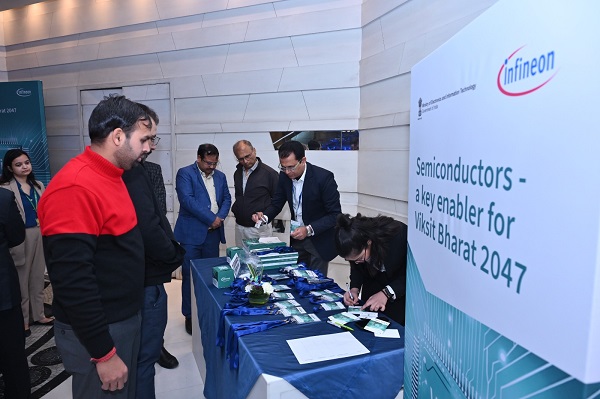
Infineon–NIELIT Collaboration Strengthens Workforce Readiness
Expanding on the partnership, Prof. Madan Mohan Tripathi, Director General, NIELIT and Vice Chancellor, NIELIT Deemed to be University, described the collaboration as a strategic step toward building India’s capabilities in critical and emerging technologies.
Prof. Tripathi highlighted NIELIT’s Digital Industry Platform, an AI-powered, cloud-native learning ecosystem that offers more than 100 industry-aligned programmes across electronics, IoT, automotive electronics, embedded systems, power electronics, cybersecurity, artificial intelligence, and advanced communication technologies.
As part of the partnership, Infineon’s tools, reference designs and real-world use cases will be integrated into the platform, enabling learners to gain hands-on, industry-relevant exposure. The platform also supports virtual labs, industry mentorship and employer-recognised micro-credentials, facilitating flexible and scalable skilling.
He noted that the collaboration aligns with national priorities under India’s semiconductor and electronics missions and will contribute to developing a future-ready workforce capable of supporting the country’s expanding semiconductor ecosystem.
Policy, Technology and Ecosystem Discussions
Over the two days, the workshop featured sessions on global and domestic semiconductor trends, advanced materials, front-end fabrication, advanced packaging, quantum technologies, export controls, investment frameworks and human resource strategies.
Participants discussed the need for balanced growth across manufacturing, design, R&D and system integration, highlighting the importance of leveraging global best practices while strengthening domestic capabilities. The sessions also examined policy and regulatory measures required to enhance India’s position in global semiconductor supply chains.

Panel Discussion Highlights Role of Women in Technology
A key segment of the workshop was the panel discussion titled “Women in Tech: Powering the Journey to Viksit Bharat 2047”, which focused on gender diversity, leadership and inclusion in technology-driven sectors.
The panel, moderated by Ms Clarice Loh, Director – Strategy, Mergers & Acquisitions (Asia Pacific), Infineon Technologies, featured speakers from government, industry and national missions, including Ms Tulika Pandey, Scientist-G and Group Coordinator, MeitY; Ms Preeti Khemani, Senior Director, Connected Secure Systems – Systems, Research & Innovation, Infineon; Ms Mamatha Venkatesh, Vice President and Head, Startup India; and Ms Shagun Kansal, Assistant Manager, Invest India.
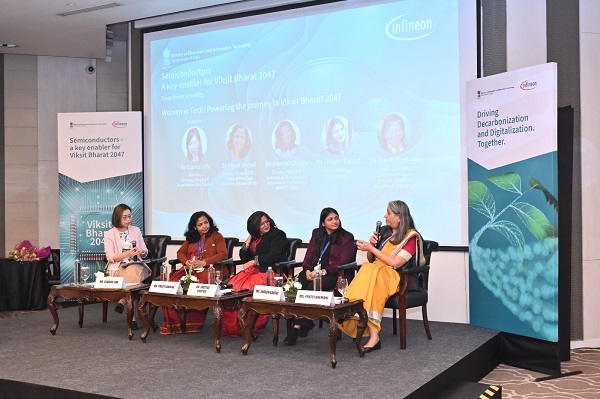
Panellists shared perspectives on navigating career challenges, building confidence and leveraging policy initiatives to enhance women’s participation in advanced technology domains. The discussion highlighted the role of national programmes such as the India Semiconductor Mission, Startup India and emerging technology missions in creating opportunities across research, manufacturing, entrepreneurship and policy.
Speakers emphasised mentorship, preparation and collaboration as key enablers for women entering and advancing in the technology workforce. The panel concluded that inclusive ecosystems are critical for sustaining innovation and achieving long-term national development goals.
Strengthening Partnerships for Long-Term Impact
The first day concluded with a networking dinner, providing participants an opportunity to engage informally and explore collaboration opportunities. According to organisers, the interactions reinforced the importance of relationship-building in strengthening public–private partnerships.
By the conclusion of the workshop, stakeholders broadly agreed on the need for continued dialogue, coordinated action and sustained investment in talent and technology to support India’s semiconductor ambitions.
The Infineon–MeitY workshop marked a significant step in aligning policy, industry and academia around a shared vision of semiconductors as a foundational pillar of Viksit Bharat 2047, with a strong emphasis on ecosystem development, workforce readiness and inclusive growth.