

What is a Resistor?
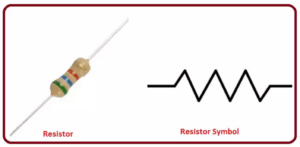

A resistor is a passive two-terminal electrical component that provides electrical resistance in an electronic circuit In electronic circuits, resistors are mainly used to:


- Reduce current flow
- Adjust signal levels
- Divide voltages
- Bias active elements
- Terminate transmission lines
Working Principle of Resistor
The working of a resistor is based on Ohm’s Law. +++++According to Ohm’s Law, the voltage across a resistor is directly proportional to the current flowing through it.

:contentReference[oaicite:0]{index=0}
The mathematical expression of Ohm’s Law is:
::contentReference[oaicite:1]{index=1}
Where:
- V = Voltage across the resistor
- I = Current flowing through the resistor
- R = Resistance

Power Dissipation in Resistors
A resistor converts electrical energy into heat energy. The power dissipated by a resistor is given by:
:contentReference[oaicite:2]{index=2}
Where:
- P = Power
- V = Voltage
- I = Current
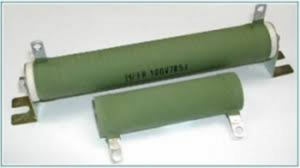
High-Power Resistors
High-power resistors are designed to dissipate large amounts of electrical power in the form of heat. These resistors are commonly used in:
- Motor control circuits
- Power distribution systems
- Generator test loads
- Industrial electronic equipment
Types of Resistors
1. Fixed Resistor
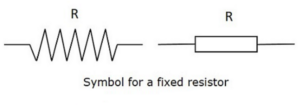
A fixed resistor is a resistor whose resistance value remains constant and cannot be adjusted. Its resistance changes only slightly due to variations in temperature, operating voltage, or time.

Applications of Fixed Resistors
- Current limiting
- Voltage division
- Biasing electronic components
- General electronic circuits
2. Variable Resistor
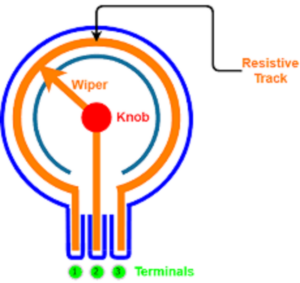
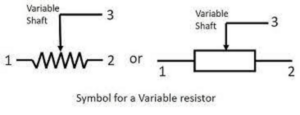
A variable resistor is a passive three-terminal device whose resistance can be adjusted manually or electronically. It contains a movable contact (wiper) placed between two terminals, allowing the resistance value to vary. The circuit symbol of a variable resistor contains an arrow indicating adjustable resistance.


Applications of Variable Resistors
- Volume control in audio systems
- Lamp dimmers
- Temperature sensing circuits
- Light sensing devices
- Humidity and force sensing systems
- Chemical activity detection systems
Advantages of Resistors
- Simple and inexpensive electronic component
- Controls current flow effectively
- Provides voltage division
- Improves circuit stability
- Available in different resistance values and power ratings
Conclusion
Resistors are fundamental components used in almost every electronic circuit. They help control current, divide voltage, and protect electronic devices from excessive current flow. Depending on the application, fixed or variable resistors can be used for efficient circuit operation.