
What is the Unix Operating System?
A computer requires an operating system to manage its hardware and software resources. The operating system acts as an interface between the computer hardware and the application software used by the user. Unix is a multiuser and multitasking operating system that allows multiple users to access the system and run several programs simultaneously.
Unix was developed in the 1970s at Bell Labs by Ken Thompson, Dennis Ritchie, and their colleagues. It was originally designed for large mainframe computer systems. The Unix operating system was written using the C programming language, which made it highly portable. Because of this portability, Unix can run on many different types of hardware platforms.
Unix also provides strong security features and efficient resource management. Today, it is used on various devices such as personal computers, servers, tablets, and mobile devices. Unix played a significant role in the development of the Internet and modern networking technologies.
Architecture of the Unix Operating System
The architecture of the Unix operating system represents its internal design and structure. Unix has a layered architecture that organizes different components of the operating system.
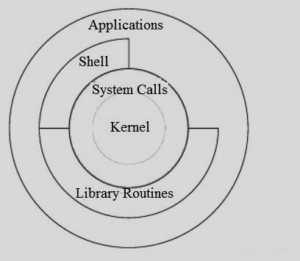
The main components of Unix architecture include:
- Hardware
- Kernel
- System Call Interface
- Shell
- Libraries and Utilities
- Application Programs
The kernel is the core component that directly interacts with the computer hardware. The system call interface acts as a bridge between the kernel and user applications. Libraries provide commonly used functions built on top of system calls. The shell is a program that allows users to interact with the operating system by entering commands.
Kernel
The kernel is the core component of the Unix operating system. It directly interacts with the hardware and manages system resources. Main functions of the kernel include:
- Managing system memory
- Managing storage devices such as disks
- Controlling hardware devices like printers
- Handling process management and multitasking
- Controlling system access for multiple users
The kernel consists of several sub-components such as boot code, device drivers for controlling hardware devices, and header files.
Shell
The shell acts as an interface between the user and the kernel. It interprets user commands and executes them using the kernel. Users communicate with the Unix system through shell commands. The shell can also execute scripts that automate tasks and system operations. Some common functions of the shell include:
- Understanding user commands
- Executing commands through the kernel
- Running shell scripts for task automation
Commands in Unix
Unix provides a large collection of commands that allow users to perform different tasks such as file management, system administration, and software development. The shell commands form the basic interface for interacting with the Unix system. These commands include various utilities such as:
- System utilities for administrative tasks
- User utilities for managing the working environment
- Tools for document formatting and typesetting
Some Unix systems also include advanced tools such as TeX and Ghost script for document processing and graphics generation. Unix also supports communication between users and systems through networking protocols and communication tools.
Properties of Unix Operating System
Since its development, Unix has been widely adopted by organizations and research institutions. It is still used in many data centers and laboratories. Some important features of Unix include:
Multiuser System
Unix allows multiple users to access the system simultaneously through terminals.
Multitasking
It allows users to run multiple programs or tasks at the same time on a single machine.
Portability
Because Unix is written in the C programming language, it can run on different hardware architectures with minimal modifications.
Hierarchical File System
Unix uses a hierarchical file system that starts with a root directory. From the root directory, multiple subdirectories and files are organized in a structured manner.
Communication Capabilities
Unix supports communication between systems using networking protocols such as TCP/IP. It also supports inter-system communication using tools like UUCP.
Pipes and Filters
Unix allows users to combine simple commands to create complex operations using pipes and filters.
Software Development Tools
Unix provides a wide range of tools for software development, programming, and system maintenance.
Types of Unix Operating Systems
Unix allows users and organizations to modify its source code according to their requirements. Because of this flexibility and portability, many Unix-like operating systems have been developed. Some well-known Unix and Unix-like operating systems include:
- Solaris
- Darwin
- AIX
- HP-UX
- FreeBSD
- NetBSD
- Xenix
- IRIX
- Tru64
- macOS
The Open Group owns the official Unix trademark and provides certification for operating systems that meet the required standards to be recognized as Unix systems.