
Introduction
Have you ever wondered how electricity reaches your home or how you are still able to use power during a power outage? There are several ways to obtain AC power at home without completely losing electricity.
Sources of AC Power Supply at Home

There are four major sources of AC power commonly used in residential applications.
1. AC Primary Power Supply
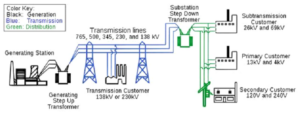
AC power is preferred over DC power for residential supply due to its ease of transmission, lower cost, and simple conversion to DC when required. The entire power distribution system consists of several stages.
Power Plant
Electrical energy is generated in power plants in the form of three-phase AC power. Three-phase systems are used because they create a rotating magnetic field for electric motors and maintain a balanced load. Power plants generally use steam turbine generators driven by coal, oil, natural gas, or nuclear energy. The generated AC voltage is stepped up to approximately 155 kV using large transformers for efficient long-distance transmission.
Transmission Substations
The 155 kV high-voltage AC power enters transmission substations, where step-down transformers reduce the voltage to around 60 kV. Circuit breakers and control equipment are also installed before the power is sent to transmission lines.
Transmission Unit
Transmission lines consist of towers carrying three conductors for the three phases and a fourth conductor for grounding to protect against lightning. The typical transmission distance can reach up to 400 km.
Distribution Grid
The distribution grid reduces the voltage further using step-down transformers, lowering the supply from 60 kV to approximately 12 kV for local distribution.
Home Transmission Units
These units split the three-phase supply into single-phase or two-phase power suitable for residential use. Voltage regulator banks are used to prevent voltage fluctuations.
AC Power Unit Near Residences
Pole-mounted step-down transformers reduce the voltage to the standard residential 240 V AC supply. This supply consists of three wires: two live wires carrying 120 V each with a 180-degree phase difference and one neutral or ground wire.
2. Solar Energy
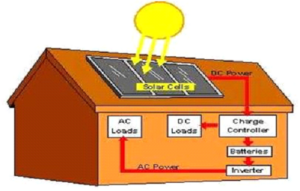
Solar energy is an increasingly popular renewable power source due to its availability and environmental benefits. A home solar power system consists of the following components.
Solar Panels
Solar panels mounted on rooftops capture sunlight and convert it into DC electrical energy.
Charge Controller
The charge controller regulates battery charging to prevent overcharging and ensures efficient energy storage.
Batteries
Batteries store the DC power generated by the solar panels. A typical system may use multiple batteries connected together.
Inverter
An inverter converts the stored DC power into AC power required by household appliances.
3. Uninterruptible Power Supply (UPS)
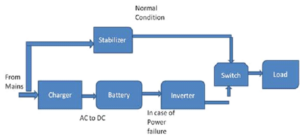
A UPS system stores electrical energy in batteries and provides backup power during a mains failure. Under normal conditions, the mains supply charges the batteries after passing through a stabilizer and rectifier circuit.
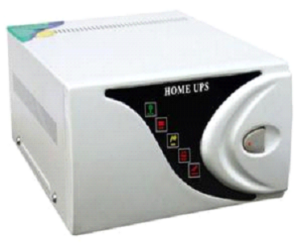
During power failure, the inverter converts the stored DC energy into AC power. A basic inverter consists of a center-tapped transformer and electronic switches that generate an AC output.
4. Generators
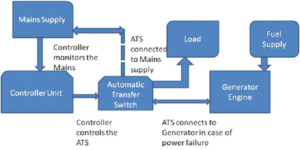
Home backup generators operate on diesel or natural gas. An automatic transfer switch monitors the mains supply and starts the generator during a power outage. Within approximately 10 seconds of power failure, the generator begins supplying power to home appliances.
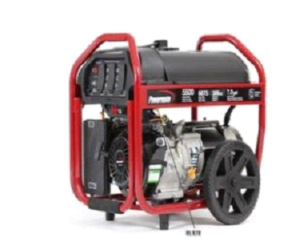
Once the mains supply is restored, the controller automatically switches back and shuts down the generator. Generators are generally more powerful than inverters but are noisier and require fuel for operation.
Automatic Selection of Power Supply Source at Home
An automatic power selection system can be designed to choose between available power sources. The system typically uses a microcontroller, relay driver, and four relays.
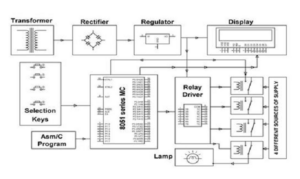
Each power source is associated with a push button indicating its availability. Based on the status of these inputs, the microcontroller controls the relay driver to select the appropriate power source. Under normal conditions, the load is connected to the mains supply. When the mains supply fails, the microcontroller activates the relay connected to the backup source. If multiple sources fail, the system automatically selects the next available source in priority order. An LCD display can be integrated to indicate the current power source and load status.