

Introduction
Arduino and Raspberry Pi are two of the most popular development boards among engineering students, hobbyists, and professionals. While experienced users understand their differences and applications, beginners often get confused about which board to choose for their projects.
Many questions arise, such as which board is easier to learn, which one is better for hardware projects, and why Arduino should be used instead of Raspberry Pi or vice versa. This article explains the features, advantages, disadvantages, and differences between Arduino and Raspberry Pi to help you make the right choice.

Differences Between Arduino and Raspberry Pi
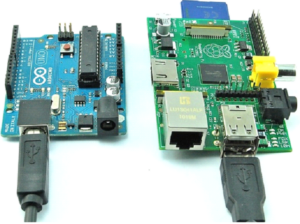
The main differences between Arduino and Raspberry Pi include their architecture, functionality, programming capability, advantages, disadvantages, and application areas.
What is a Raspberry Pi?
The Raspberry Pi is a fully functional single-board computer about the size of a credit card. It includes a processor, RAM, GPU, and HDMI output, making it capable of performing tasks similar to a desktop computer.
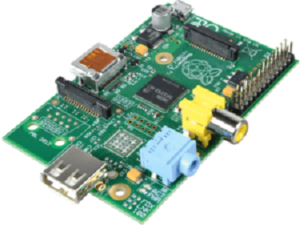
It runs a Linux-based operating system and supports most Linux software. With proper configuration, a Raspberry Pi can function as a media center, web server, or even a video game emulator.
Although the Raspberry Pi does not have built-in storage, it uses an SD card as flash memory. This allows users to easily swap operating systems or update software. It also supports network connectivity, enabling SSH access and FTP file transfers. A typical Raspberry Pi features a 700 MHz processor, 512 MB RAM, and supports SPI, I2C, and Serial communication protocols.
Advantages of Raspberry Pi
- Very easy to connect to the internet
- Supports a complete Linux software stack
- Can be programmed using multiple programming languages
- Supports HDMI display, audio, and USB peripherals
Disadvantages of Raspberry Pi
- Hardware access is not real-time and may be delayed
- Cannot directly drive inductive loads
- No built-in Analog to Digital Converter (ADC)
- Hardware design is not fully open source
When to Use and Not Use Raspberry Pi
Raspberry Pi is best suited for projects that require minimal hardware interaction, complex software processing, or internet connectivity. However, it is not ideal for projects that require precise real-time control, multiple sensor inputs, or extensive hardware interfacing.
What is Arduino?
Arduino is a microcontroller-based development platform consisting of hardware, programming language support, and an Integrated Development Environment (IDE). Unlike Raspberry Pi, Arduino does not run a full operating system.
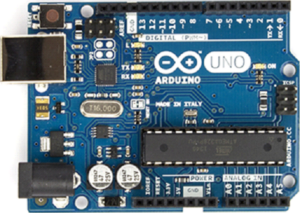
Arduino boards are designed to interface directly with sensors, actuators, and external hardware components. They execute code written in Arduino or C/C++ and respond instantly to input signals. A typical Arduino board uses an 8-bit AVR microcontroller and supports SPI, I2C, and Serial communication protocols.
Advantages of Arduino
- Very easy to get started for beginners
- Supports real-time hardware applications
- Open-source hardware and software
- Large community support with many libraries and shields
Disadvantages of Arduino
- Less powerful compared to Raspberry Pi
- Limited to Arduino or C/C++ programming
- Internet connectivity requires additional hardware
When to Use and Not Use Arduino
Arduino is ideal for projects that involve extensive hardware interaction, sensor data acquisition, and device control. However, it is not suitable for projects requiring complex software stacks, graphical interfaces, or operating systems.
Arduino vs Raspberry Pi
The choice between Arduino and Raspberry Pi depends on the nature of the project. Arduino is hardware-focused and excels in real-time applications, while Raspberry Pi is software-focused and suitable for computing tasks.
Arduino requires external components like LEDs, motors, sensors, and displays to function, whereas Raspberry Pi can operate independently with just a power supply and SD card. Raspberry Pi supports video, audio, and networking, making it ideal for multimedia and internet-based projects. Arduino, on the other hand, is better suited for embedded systems and control applications.
Comparison Table: Arduino vs Raspberry Pi
| Feature | Raspberry Pi | Arduino |
|---|---|---|
| Programming Language | Multiple languages | Arduino, C/C++ |
| Processor Speed | 700 MHz | 16 MHz |
| Internet Connectivity | Very easy | Possible with add-ons |
| Hardware Design | Closed source | Open source |
| Real-Time Operation | Not real-time | Real-time |
| Analog to Digital Converter | No | Yes |