
Introduction
Recent trends in industrial and home control systems show how rapidly automation technologies are evolving. Despite a slow start in earlier decades, automation has progressed from simple, wired control systems to advanced wireless and intelligent control applications.
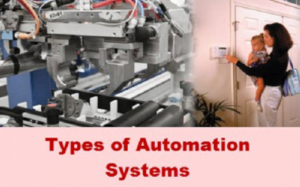

With the development of different types of automation systems, process control has advanced significantly, enabling higher productivity, improved accuracy, and reduced operational costs. This article provides an overview of automation systems and their applications in various fields.
What is Automation?
Automation refers to the operation of equipment or machines with minimal human intervention. It is the next stage beyond mechanization, where physical labor is required to perform tasks manually. By using computer-aided and automated machinery, manual effort is greatly reduced. Automation systems integrate sensors, feedback control loops, controllers, and automatic actuating devices to perform operations efficiently and accurately.
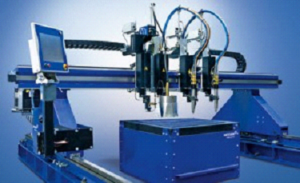
A common misconception about automation is that it replaces human jobs. In reality, automation aims to improve productivity and product quality, reduce repetitive manual tasks, enhance safety, lower production costs, and make operations more operator-friendly.
Automation solutions are widely used in industries, automobiles, aircraft systems, and domestic control applications. Advanced controllers such as Programmable Logic Controllers (PLCs) are commonly used to implement automation control strategies. PLCs are programmed with various control loops such as feedback, feedforward, cascade, and ratio control loops to handle complex automation tasks.
Types of Automation Systems
Automation systems replace traditional hard-wired relay systems by automating process functions using hardware and software tools with minimal human involvement. Based on application area and control nature, automation systems are broadly classified into two main types:
1. Industrial Automation
Industrial automation involves making industrial production processes more flexible, efficient, and reliable. By integrating automation technologies, industries achieve intelligent manufacturing that improves product quality, increases productivity, and reduces downtime and material waste.
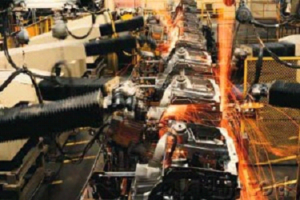
Industrial automation uses various control components such as PLCs, sensors, actuators, communication modules, machine drives, Human Machine Interfaces (HMI), and industrial robots.
This type of automation is widely used in automotive, electronics, medical, telecommunications, consumer goods, and manufacturing industries. Industrial automation systems can be fixed, programmable, flexible, or fully integrated.
Numerically Controlled Machines
Numerically Controlled (NC) machines are computer-controlled machines that perform operations by processing and controlling process variables using computers. These are also known as Computerized Numerical Control (CNC) machines.
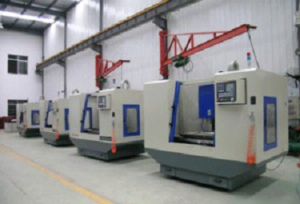
CNC machines are commonly used in cutting, drilling, and milling applications where high precision and accuracy are required.
Computer-Aided Manufacturing (CAM)
In Computer-Aided Manufacturing, the entire manufacturing process—including planning, production, and control—is automated. This system integrates CNC machines, industrial robots, and other automation devices.
Computers are also used for product planning, design, and layout. Examples include Computer-Aided Design (CAD), Computer-Aided Drafting and Design (CADD), and Computer-Aided Process Planning (CAPP).
Industrial Robots
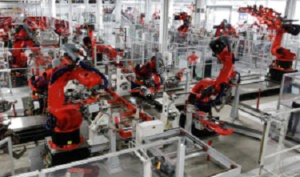
Industrial robots are automated machines capable of performing repetitive or complex tasks for long durations. These robots are especially useful in hazardous or dangerous environments where human safety is a concern.
Flexible Manufacturing Systems
Flexible manufacturing systems represent fully automated production environments. From planning and design to manufacturing and product dispatch, all processes are integrated and automated.
These systems combine CNC machines, industrial robots, and advanced automation equipment to deliver high flexibility and efficiency.
2. Home Automation
Home automation improves comfort, safety, and energy efficiency in residential buildings. As technology advances, controlling home appliances has become more flexible and intelligent. Since electrical installations form the core of modern buildings, intelligent home automation ensures efficient energy management, improved safety, and reduced power consumption.
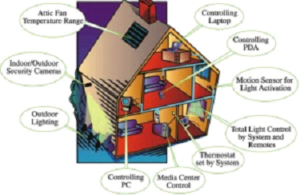
Home automation systems control lighting, HVAC (Heating, Ventilation, and Air Conditioning), energy management, security and surveillance, audio/video systems, and user interfaces.
These systems use sensors to monitor parameters such as temperature, motion, pressure, and light intensity. The sensor data is processed by controllers, which then send commands to actuators like relays and motors.
Power Line Home Automation System
This automation system uses existing power lines to transmit data, eliminating the need for additional communication cables. It is cost-effective but requires additional converter circuits, making the system slightly complex.
Wired Home Automation System
In wired home automation, all appliances are connected through a common communication bus. This bus communicates with a central controller, such as a PLC, which receives input signals and sends control commands to actuators.
Wireless Home Automation System
Wireless home automation is a more advanced and flexible solution compared to wired systems. It uses wireless technologies such as RF, Zigbee, GSM, Wi-Fi, and Bluetooth.
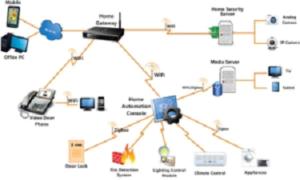
These systems require minimal wiring and allow remote control of home appliances through mobile devices or centralized control units.
Conclusion
Industrial and home automation systems have become essential in modern society. Automation enhances productivity, accuracy, safety, and energy efficiency while reducing labor costs. With continuous technological advancements, automation systems will play an increasingly important role in improving quality of life and industrial performance.