
Introduction
A Magnetic Switch is an electromechanical switching device that operates using a magnetic field. The concept of the magnetic switch was first developed by Professor Valentin Kovalenkov at Leningrad Electrotechnical University in 1922 and was later refined by researchers at Bell Telephone Laboratories in 1936. A magnetic switch consists of two primary components:
- A magnet
- A magnetically sensitive switch
These switches are available in Normally Open (NO) and Normally Closed (NC) configurations. They are widely used in security systems, door and window monitoring, industrial automation, and various electronic control applications.

What is a Magnetic Switch?
A Magnetic Switch is an electrical switch that establishes or interrupts an electrical circuit when exposed to a magnetic field. When a sufficiently strong magnetic field is present, the switch changes its state. Once the magnetic field is removed, the switch returns to its original state.
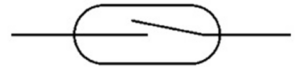
Magnetic switches are especially useful in applications where direct mechanical contact is undesirable or impossible, such as underwater systems, sealed environments, and hazardous industrial locations. To protect the internal contacts and maintain reliable operation, magnetic switches are typically enclosed in sealed glass or protective housings. This design protects the switch from dust, moisture, dirt, and other environmental factors.
Working Principle of a Magnetic Switch
A magnetic switch operates by responding to the magnetic field generated by a permanent magnet or an electromagnet. When electric current flows through an electromagnet, it creates a magnetic field. This magnetic field attracts or influences the magnetic sensing element inside the switch, causing the contacts to open or close.
When the magnetic field is removed, the sensing element returns to its original position, restoring the switch to its normal state. Magnetic switches are highly reliable because they are not affected by contaminants such as water, grease, oil, dust, or dirt. This makes them suitable for harsh operating environments. Common examples of magnetic switching devices include:
- Reed Switches
- Hall Effect Sensors
- Electromechanical Relays
Types of Magnetic Switches
1. Reed Switches
Reed switches are among the most widely used magnetic switches. They contain two ferromagnetic reeds enclosed in a sealed glass tube.
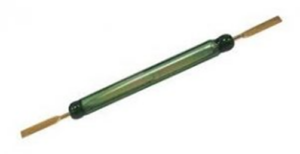
When a magnetic field is applied, the reeds move together and complete the electrical circuit. Reed switches are inexpensive, highly sensitive, and commonly used in:
- Security alarm systems
- Door and window sensors
- Mobile phones
- Home appliances
- Automotive applications
- Heavy industrial machinery
Their operation depends on factors such as reed size, magnetic field strength, and surrounding environmental conditions.
2. Hall Effect Switches
Hall Effect Switches are semiconductor-based devices that detect magnetic fields electronically without moving mechanical parts.
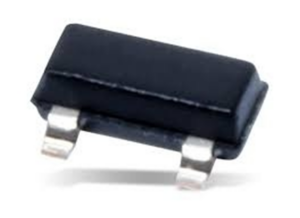
Since they are mechanically inert, they are highly resistant to vibration, shock, and wear. These switches are commonly used in:
- Elevator systems
- Factory automation equipment
- Automobiles
- Industrial actuators
- Position sensing systems
Hall Effect switches are available in:
- Unipolar Type – Detects only one magnetic pole.
- Omnipolar Type – Detects either north or south magnetic poles.
3. Triac and Transistor Magnetic Switches
Triac and transistor-based magnetic switches use additional electronic circuitry to control larger loads. Triac switches are mainly used in AC power control applications, while transistor switches are commonly used in DC switching applications.
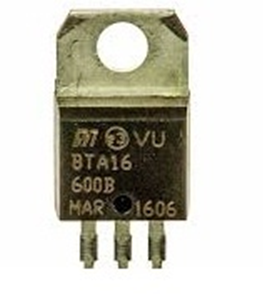
These switches are ideal for controlling:
- Motors
- Relays
- Industrial loads
- Power control systems
When combined with reed switches or Hall Effect sensors, they can handle higher current and voltage levels.
Magnetic Switch Circuit Diagram and Operation
A simple magnetic switch circuit can be constructed using:
- Magnetic Switch
- 3V Battery
- 470Ω Resistor
- LED
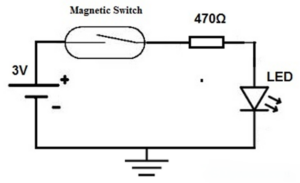
The magnetic switch acts as a sensor that controls the flow of current in the circuit.
Normally Open (NO) Magnetic Switch
In a Normally Open magnetic switch, the circuit remains open when no magnet is present. When a magnet is brought near the switch, the contacts close, allowing current to flow through the circuit and turning ON the LED or connected load.
Normally Closed (NC) Magnetic Switch
In a Normally Closed magnetic switch, the circuit remains closed when no magnet is present. When a magnet is brought near the switch, the contacts open, interrupting current flow and turning OFF the connected load. This operation makes magnetic switches ideal for sensing the presence or absence of magnetic fields.
Features of Magnetic Switches
- Non-contact switching operation.
- Available in Normally Open (NO) and Normally Closed (NC) types.
- Compact and lightweight design.
- Fast switching response.
- Low contact resistance.
- Long operational life.
- Suitable for AC and DC circuits.
- Resistant to dust, dirt, oil, grease, and moisture.
- Low maintenance requirements.
Advantages of Magnetic Switches
- Simple and reliable operation.
- Compact and lightweight construction.
- Low cost.
- Quick response time.
- Long service life.
- Low maintenance requirements.
- Can switch both AC and DC circuits.
- Operates without physical contact.
- Unaffected by dust, dirt, and moisture.
- Requires only a magnet for activation.
- Can remain activated indefinitely without consuming electrical power.
Disadvantages of Magnetic Switches
- Requires a magnetic field for operation.
- Performance decreases if the magnet is too far away.
- Glass-enclosed reed switches can be fragile.
- Arcing may occur between contacts in some applications.
- External magnetic fields may cause unintended activation.
- Limited switching distance.
Applications of Magnetic Switches
1. Door and Window Security Systems
Magnetic switches are widely used to detect the opening and closing of doors and windows in security alarm systems.
2. Battery-Powered Devices
They are commonly used in battery-operated electronics because of their low power requirements.
3. Speed Measurement Systems
Magnetic switches are used in tachometers, wheel speed sensors, and ABS (Anti-lock Braking Systems).
4. Automotive Applications
They are used in ignition systems, fuel level indicators, power steering systems, and vehicle control panels.
5. Industrial Control Systems
Magnetic switches are installed in machinery control consoles, instrumentation panels, and automated production systems.
6. Transportation Systems
These switches are used in buses, trucks, rail systems, and heavy construction equipment for safety and monitoring functions.
7. Refrigeration Systems
Magnetic switches detect refrigerator door opening and closing, helping prevent energy loss and improving efficiency.
8. Home Automation
Smart home systems use magnetic switches for access control, security monitoring, and automation functions.
Conclusion
A Magnetic Switch is a reliable and versatile switching device that operates through magnetic field detection. Available in reed switch, Hall Effect, and transistor-based configurations, these switches offer non-contact operation, long life, low maintenance, and excellent environmental resistance. Their widespread use in security systems, industrial automation, automotive electronics, and home automation demonstrates their importance in modern electrical and electronic applications.