

Introduction
The power grid is a vital part of electricity generation, transmission, and distribution systems. Electrical substations play a crucial role in all power grid operations. These facilities are responsible for transforming voltage levels and controlling power flow to ensure reliable electricity supply to consumers.
By adjusting voltage and frequency levels, substations regulate the amount of electrical power delivered to end users. Electrical substations are classified into various types such as generation, transmission, distribution, indoor, outdoor, pole-mounted, switching, and converter substations.
In special cases such as thermal power plants, hydropower stations, and wind farms, collector substations are used to transfer power from multiple generating units into a single transmission system.
Electrical Substation Components
An electrical substation consists of various components such as isolators, bus bars, transformers, and protective equipment. These components work together to transfer electrical power safely from generation units to distribution networks.
Designing an electrical substation is a complex engineering task. It involves switching system design, equipment layout, component selection, structural planning, electrical layout design, relay protection schemes, and apparatus rating calculations.
Power Transformer
The main function of a power transformer is to step up the voltage at the generation end and step down the voltage at the distribution end. These transformers ensure efficient long-distance power transmission with minimal losses.
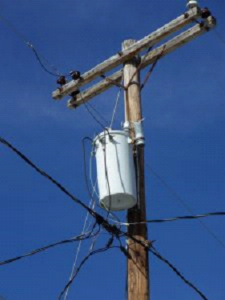
Oil-immersed, naturally cooled, three-phase transformers are commonly used for ratings up to 10 MVA. For ratings above 10 MVA, air-blast or forced cooling transformers are typically used. Power transformers are designed to operate at maximum efficiency under full-load conditions. They are usually disconnected during light-load operation to maintain efficiency.
Instrument Transformer
Instrument transformers are used to reduce high current and voltage levels to safe and measurable values. The standard output values are typically 110 V for voltage and 1 A or 5 A for current.
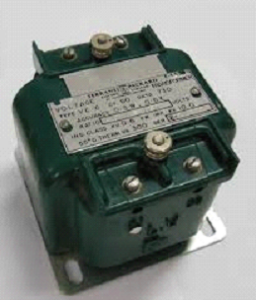
These transformers also supply signals to protective relays for fault detection. Instrument transformers are classified into two types: voltage transformers and current transformers.
Voltage Transformer
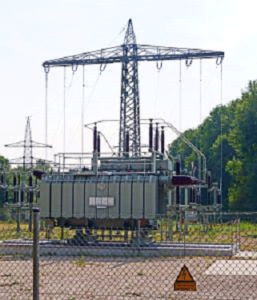
A voltage transformer is an instrument transformer that converts high voltage into a lower, proportional voltage suitable for measurement and protection.
Current Transformer
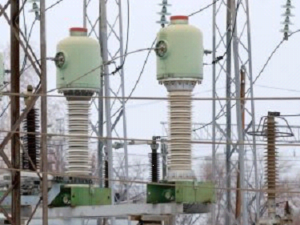
A current transformer reduces high current values to lower levels for use with measuring instruments, control equipment, and protective relays. It is connected in series with the circuit.
Lightning Arrester
A lightning arrester protects substation equipment from high-voltage surges caused by lightning or switching operations. It limits the magnitude and duration of overvoltage by diverting excess current to the ground.
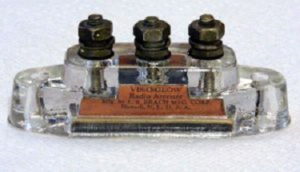
Lightning arresters are connected between the system conductor and earth, thereby protecting insulation and other substation components from damage.
Wave Trap
A wave trap is installed on incoming transmission lines to block high-frequency communication signals. These signals originate from distant stations and are used for carrier communication. The wave trap prevents high-frequency signals from entering substation equipment and directs them to telecommunication circuits instead.
Circuit Breaker
A circuit breaker is an electrical switch designed to open or close a circuit during normal operation or fault conditions. It operates automatically when a fault occurs.
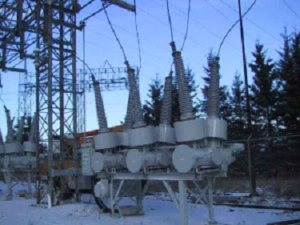
When a fault is detected, the protective relay sends a signal to the circuit breaker, causing it to open and isolate the faulty section of the system.
Bus Bar
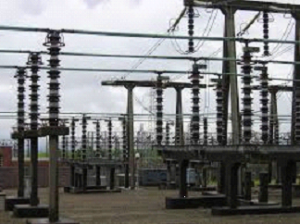
A bus bar is a rigid conductor used to collect and distribute electrical power within a substation. It connects multiple incoming and outgoing circuits. If a fault occurs in a bus bar section, all connected circuits must be disconnected quickly to prevent damage due to excessive heating.
Isolator in Substation
An isolator is a mechanical switch used to disconnect a circuit after the current flow has been interrupted. It operates under no-load conditions and provides visible isolation. Isolators do not have arc-quenching capabilities and are not designed to interrupt load current. They are mainly used for maintenance and safety purposes.
Batteries
Batteries supply DC power to control circuits, relay protection systems, and emergency lighting in substations and power plants.
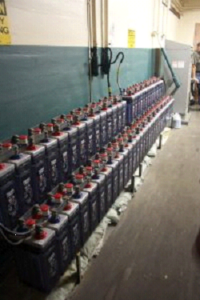
Depending on the DC voltage requirement, batteries are connected in series or parallel. Lead-acid batteries are commonly used due to their reliability, cost-effectiveness, and high voltage capability.
Switchyard
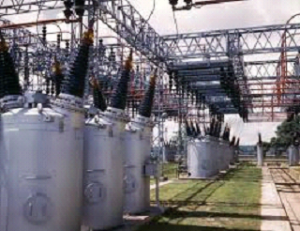
A switchyard connects generation units to transmission lines and helps maintain constant voltage levels. It directs power from substations to nearby transmission networks or power stations.
Relay
Relays are protective devices used to detect abnormal conditions such as faults or overloads. Once a fault is detected, the relay sends a trip signal to the circuit breaker.
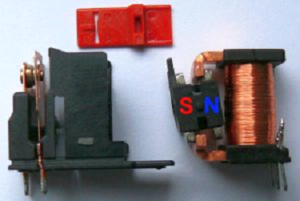
The circuit breaker then disconnects the faulty component, protecting equipment from damage and ensuring system safety.
Capacitor Bank
A capacitor bank consists of capacitors connected in series or parallel to store electrical energy. Its main function is to improve the power factor of the system.
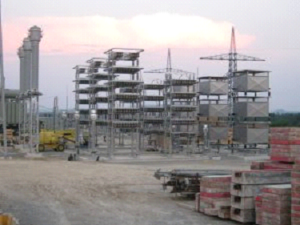
Capacitor banks supply reactive power, reduce phase difference between voltage and current, minimize losses, and improve voltage regulation. They are widely used to correct power factor and reduce system lag.
Carrier Current Apparatus
Carrier current equipment is permanently installed in substations for communication, telemetry, supervisory control, and protection purposes. This equipment is connected to high-voltage lines and is usually housed in a dedicated carrier room within the substation.
Insulator
Insulators support and electrically isolate bus bars and other conducting components in substations. They prevent leakage currents and ensure system safety. Insulators are classified into post-type and bushing-type insulators. Post-type insulators consist of a ceramic body with a cast-iron base, while bushing-type insulators include ceramic shells and positioning washers for bus bar mounting.
Conclusion
Advancements in technology have significantly improved the installation, operation, and maintenance of electrical substations. Modern substations now incorporate automation systems such as SCADA (Supervisory Control and Data Acquisition). SCADA enables remote monitoring and control, improving reliability, efficiency, and safety of power system operations.