
-
Ultra-compact micro POL module FS3303 delivers 3 A in a 2.5 × 2.5 mm footprint with only 1.2 mm height, enabling high-density power for optical modules and AI edge systems
-
High efficiency up to 95% with operation up to +90 °C (and +125 °C with derating), supporting low-voltage rails from 0.4 V to 3.3 V for ASICs, SoCs, DSPs, and AI chipsets
-
Integrates controller, driver, MOSFETs, and inductor in TDK’s advanced 3D chip-embedded package, minimizing external components and maximizing board space savings
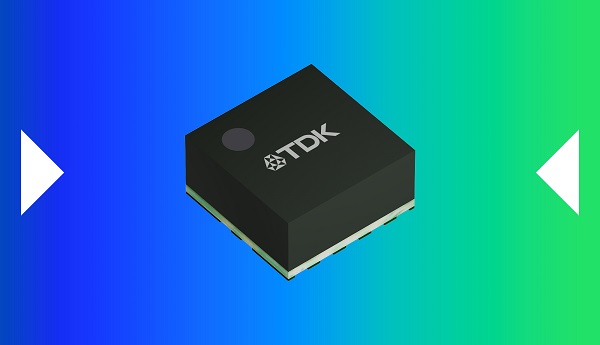
TDK Corporation (TSE: 6762) today announced the FS3303, the first member of a major expansion of its micro POL family of ultra‑compact, non‑isolated DC‑DC power modules for optical modules in AI edge systems and other space‑constrained designs. Despite its small footprint of just 2.5 x 2.5 mm and a height of only 1.2 mm, the FS3303 can deliver 3 A at ambient temperatures of up to +90 °C (up to +125 °C with derating) and boasts a peak efficiency of around 95%. The FS3303-0400-AL is in full production and is sampling at major distributors.

The FS3303 and the upcoming high‑performance point‑of‑load (POL) converter lineup spans 3 A to 80 A output across 0.3 V to 3.3 V rails. They enable next‑generation optical networking and AI accelerator platforms to push performance without sacrificing board space. An example is compact optical modules, which are scaling from 10 Gbit/s to 1.6 Tbit/s. The new portfolio delivers height profiles between 1.2 mm and 1.7 mm.
Engineered for low‑voltage rails, the FS3303 supports input voltages from 2.7 V to 6 V and output voltages from 0.4 V to 3.3 V. This makes it a versatile solution for ASICs, SoCs, DSPs, and emerging AI chipsets requiring tight regulation and high transient performance.
The FS3303 leverages TDK’s proprietary 3D chip‑embedded packaging technology, integrating the controller, driver, MOSFETs, and power inductor. This architecture minimizes external components and delivers a complete DC‑DC solution with exceptional area and height savings—ideal for next‑generation optical transceivers and edge AI modules.