
Introduction
A diode is a two-terminal semiconductor device consisting of an anode and a cathode. Its primary function is to allow current to flow in one direction while blocking it in the opposite direction. Due to this property, diodes are widely used in electronic circuits. Semiconductor diodes were among the first electronic components to be developed. Today, most diodes are manufactured using silicon, although germanium (Ge) and gallium arsenide (GaAs) are also used for specific applications. Different types of diodes are available in the market, each designed for particular purposes.
What Is a Switching Diode?
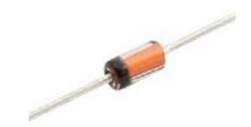
Switching Diode
A switching diode is a specially designed diode used for high-speed switching applications. It is mainly employed to turn circuits ON and OFF efficiently. When forward biased, the switching diode conducts current, and when reverse biased, it blocks current flow.
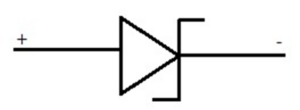
Switching Diode Symbol
Its key feature is a very fast reverse recovery time, allowing rapid transition from the ON state to the OFF state. Switching diodes such as the 2DK and 2AK families are commonly used in switching circuits, electronic computers, and high-speed logic systems.
Switching Diode Working Principle
The working principle of a switching diode is based on its biasing condition. When the applied voltage is below a certain reference level, the diode becomes forward biased and offers very low resistance, acting as a closed switch. When the applied voltage exceeds the reference level in reverse bias, the diode presents high resistance and behaves like an open switch. Thus, the switching diode operates as an electronic switch.
Specifications of a Switching Diode
- Forward voltage: 0.4 V to 1.2 V (depending on forward current)
- Maximum forward voltage: 1 V at 10 mA
- Average forward current: 200 mA
- DC forward current: 300 mA
- Repetitive peak forward current: 400 mA to 500 mA
- Peak forward surge current: 4 A
- Non-repetitive surge current: 1 A (1-second pulse), 4 A (1 μs pulse)
- Reverse breakdown voltage: 100 V
- Reverse voltage: 75 V
- Repetitive peak reverse voltage: 100 V
- Reverse leakage current: 5 μA at 75 V, 100 μA at 100 V
- Maximum reverse recovery time (trr): 4 ns
- Diode capacitance: 4 pF
- Power dissipation: 500 mW
- Weight: 0.1 g
Switching Diode Circuit and Its Working
When switch S1 is open, no DC voltage is applied to the positive terminal of the switching diode. In this condition, the diode is OFF and exhibits very high resistance, disconnecting capacitor C2 from the circuit. In this state, L1 and C1 form a parallel LC resonant circuit. When switch S1 is closed, resistor R1 supplies DC voltage to
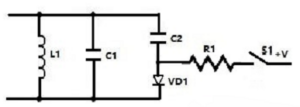
Switching Diode Circuit
the diode, making it forward biased. As a result, the diode turns ON and offers very low resistance, connecting capacitor C2 in parallel with the LC circuit. The resonant frequency changes due to the variation in total capacitance. Thus, the switching diode controls the resonant frequency of the LC circuit by acting as an electronic switch.
Advantages of Switching Diodes
- Very fast switching speed
- Small physical size
- Long operational life
- High reliability
- Low noise generation
- Fast reverse recovery time
- Good performance in harsh environments
- Suitable for small-signal switching up to 100 mA
Applications of Switching Diodes
- High-speed switching circuits
- Detection and pulse rectification circuits
- High-frequency electronic circuits
- Automatic control systems
- Voltage clamping circuits
- Switched-mode power supplies (SMPS)
- Reverse current and discharge protection
Conclusion
Switching diodes are essential components in modern electronic circuits where fast switching and high reliability are required. Their quick response time and compact size make them ideal for digital, RF, and high-frequency applications.