
Introduction
On the HF ham radio bands, amateur radio contacts can take a variety of forms. For beginners, it is helpful to understand the general structure of a contact and the procedures involved. This ensures efficient and effective communication with other operators, especially when signals are weak or interference is high.
Many contacts on the HF bands use standard abbreviations and operating procedures. These contacts are commonly referred to as QSOs.

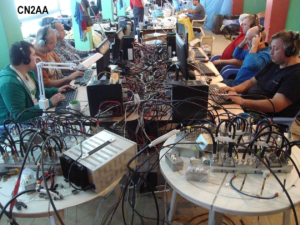
A large number of HF contacts are known as “rubber stamp” QSOs. These follow a standard format and usually do not involve long conversations. This approach allows operators to make many contacts in a short period of time and helps operators who may not speak the same language communicate using simple, standardized exchanges.
Basic Ham Radio QSO Format
HF contacts are usually divided into several transmissions, often called “overs.” While some contacts may be longer, the following structure covers most typical QSOs.
1. Check if the Frequency is Clear
Before transmitting, always listen carefully to ensure the frequency is not already in use. There may be a station you cannot hear, but others can. Only transmit when you are sure the frequency is clear.
2. Calling CQ (General Call)
A contact usually begins with a CQ call. A common format is the “three by three” method:
- Repeat “CQ” three times.
- Give your callsign three times using phonetics.
- Repeat the entire sequence three times.
This method keeps the call clear and allows other stations to recognize your callsign easily.
3. Response from Another Station
Any station hearing the CQ call may respond. The responding station usually:
- Gives their callsign once or twice using phonetics.
- Invites the calling station to transmit.
4. First Exchange
The station that called CQ typically responds by:
- Greeting the other operator.
- Giving a signal report.
- Providing their name and location.
- Ending with both callsigns.
5. Second Exchange
The responding station follows a similar format:
- Provides a signal report.
- Gives their name and location.
- Ends with the callsigns.
6. Equipment and Weather Details
In the next transmission, operators often share:
- Details about their transmitter or transceiver.
- Antenna information.
- Weather conditions.
Call signs are usually given at the beginning and end of each transmission.
7. QSL Information and Sign-off
Before ending the contact, operators may exchange QSL information. This includes instructions for confirming the contact, such as using a QSL manager. After that, the stations sign off.
Frequency Etiquette
After a contact ends, another station may call on the same frequency. Normally, the frequency belongs to the station that originally called CQ. However, the operator may choose to stay or move to another frequency. Giving callsigns at the start and end of each transmission is standard practice. This helps meet legal identification requirements and reduces confusion, especially under poor operating conditions.
Contest and DX QSOs
During contests or when a rare DX station is on the air, contacts are much shorter to allow more stations to be worked. A typical contest or DX exchange includes:
- Callsigns of both stations.
- A brief signal report.
Quick and efficient operation is essential in these situations.
Split Frequency Operation
DX stations in high demand often operate split frequency. This means they:
- Transmit on one frequency.
- Listen on another frequency.
This helps manage large numbers of calling stations.
Tips for Making a DX Contact
- Listen carefully before calling.
- Understand the station’s operating pattern.
- Call at the right moment.
- Follow the operator’s instructions.
Conclusion
Understanding the typical HF QSO format helps operators communicate more efficiently and professionally. Whether making casual contacts, contest QSOs, or DX exchanges, following proper procedures ensures smooth and enjoyable communication on the amateur bands.