
Introduction
Switches are generally classified into two categories based on their operating behavior: latching switches and non-latching switches. Various switch types, including momentary, electronic, normally open (NO), and normally closed (NC) switches, fall under these categories. A latching switch remains in its current state after being activated and does not require continuous pressure to stay ON. In contrast, a non-latching switch remains active only while it is being pressed and returns to its original state when released. Due to their convenience and reliability, latching switches are widely used in household appliances, industrial equipment, and electronic devices.
What is a Latching Switch?
A Latching Switch is an electrical switch that maintains its ON or OFF state after being actuated, even after the applied pressure is removed. The switch changes state each time it is pressed and remains in that state until it is pressed again. Unlike momentary switches, which operate only while being pressed, latching switches provide a stable output without requiring continuous user interaction.

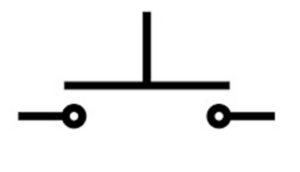
These switches are commonly found in home lighting systems, central heating controls, stereo systems, alarm systems, industrial machinery, and electronic equipment. Latching switches are typically manufactured using durable materials such as metal or high-quality plastic and are available in both mechanical and electrically operated versions.
Working Principle of a Latching Switch
A latching switch operates using a simple toggle mechanism. When the switch is pressed, it changes its state from OFF to ON and remains in that position even after the pressure is removed. When pressed again, the switch returns to its original OFF state. This mechanism allows users to control devices without continuously holding down the switch, making it highly suitable for applications that require long-term activation. A common example is a household light switch. Once turned ON, the light remains ON until the switch is pressed again to turn it OFF.
Latching Switch Circuit Diagram and Working
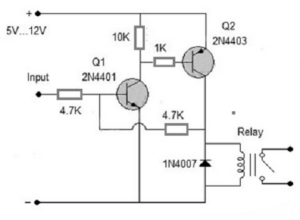
A simple transistor-based latching switch circuit can be constructed using the following components:
- PNP Transistor (2N4403)
- NPN Transistor (2N4401)
- Relay
- 1N4007 Diode
- 1K Resistor
- 10K Resistor
- Two 4.7K Resistors
- 5V to 12V Power Supply
Working of the Circuit
A latching circuit locks its output state after receiving an input signal and maintains that state even after the input signal is removed. When a signal is applied to the base of the NPN transistor (Q1), it begins conducting. This action pulls the base of the PNP transistor (Q2) toward ground, causing Q2 to conduct as well. The relay connected to the collector of Q2 becomes energized, activating the connected load.
A feedback resistor connected between the collector of Q2 and the base of Q1 continuously supplies bias voltage to Q1. This feedback keeps both transistors conducting even after the initial input signal is removed. As a result, the relay remains energized until power is disconnected or an external reset signal is applied. The 1N4007 diode protects the circuit from reverse voltage spikes generated by the relay coil. This type of circuit is commonly used as an alternative to Silicon Controlled Rectifiers (SCRs) in alarm and security systems.
Types of Latching Switches
Latching switches are available in several configurations based on the number of poles and throws they support.
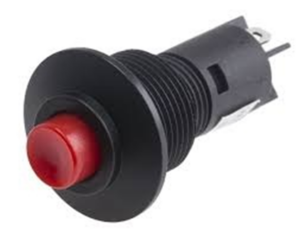
1. SPST Latching Switch
SPST stands for Single Pole Single Throw. It is the simplest type of latching switch and controls a single circuit.
Features
- Rated up to 2A at 250VAC.
- Operational life of up to 50,000 cycles.
- Metal construction.
- Waterproof and dustproof design.
- Operating temperature range from -40°C to +70°C.
- Suitable for indoor and outdoor applications.
- Corrosion-resistant and non-magnetic.
Applications
- Industrial control panels
- Electronic kiosks
- Ticket dispensing machines
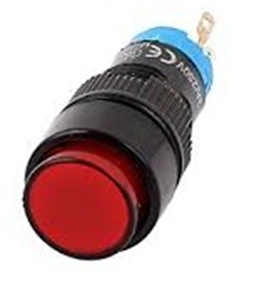
2. SPDT Latching Switch
SPDT stands for Single Pole Double Throw. It allows one input to be connected to either of two outputs.
Specifications
- Panel mount design.
- SPDT contact configuration.
- Panel cutout size: 19.1 mm.
- IP67 protection rating.
- Rated voltage: 125V/250V AC.
- Current rating: 16A to 26A.
- Push-button actuator.
- Quick-connect terminals.
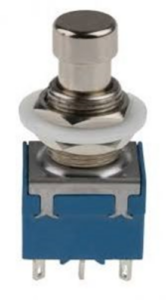
3. DPDT Latching Switch
DPDT stands for Double Pole Double Throw. It can simultaneously control two separate circuits and switch between two outputs for each circuit.
Specifications
- PCB mounting type.
- DPDT contact configuration.
- Panel cutout size: 12.2 mm.
- Current rating: 2A to 4A.
- Voltage rating: 12V, 24V DC and 125V/250V AC.
- Solder lug terminals.
- Plunger cap actuator.
Applications
- Industrial foot control systems
- Motor control circuits
- Automation equipment
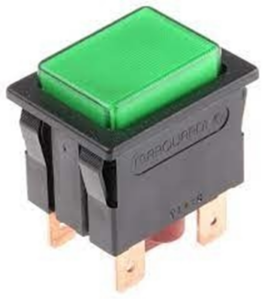
4. DPST Latching Switch
DPST stands for Double Pole Single Throw. It allows two separate circuits to be switched ON or OFF simultaneously.
Specifications
- Panel mount design.
- DPST contact configuration.
- Panel cutout size: 30 × 22 mm.
- IP40 protection rating.
- Green rectangular actuator.
- Rated voltage: 230V AC.
- Current rating: 16A at 250V AC.
- Tab terminal connections.
Advantages of Latching Switches
- Available in compact sizes.
- Capable of handling heavy electrical loads.
- Long operational lifespan.
- Reliable and secure operation.
- Provides silent and uninterrupted functioning.
- Improves convenience and controllability.
- Reduces the need for continuous user interaction.
- Quick and easy device integration.
- Suitable for a wide range of electrical and electronic systems.
Disadvantages of Latching Switches
- Typically require manual actuation.
- Not suitable for applications requiring automatic reset.
- May not be ideal for certain high-risk safety applications.
- Mechanical wear can occur after extended use.
Applications of Latching Switches
1. Lighting Systems
Latching switches are commonly used as household light switches because they maintain their state without requiring continuous pressure.
2. Home Appliances
They are used in central heating systems, stereo equipment, and other household electronics.
3. Computers and Consumer Electronics
Many electronic devices use latching switches for power control and operational settings.
4. Alarm Systems
Latching switches are widely used in fire alarms, burglar alarms, and security systems where the alarm must remain active until manually reset.
5. Industrial Equipment
Industrial machines use latching switches for controlling motors, relays, and automation processes.
6. Spa Equipment and Tattoo Machines
These switches are used in specialized equipment requiring stable ON/OFF control.
7. SCR-Based Circuits
Latching switches are frequently used in circuits involving Silicon Controlled Rectifiers (SCRs) and relay-based control systems.
8. Automation and Control Panels
They are commonly installed in industrial control panels to maintain operational states without continuous operator intervention.
Conclusion
A Latching Switch is a practical and reliable switching device that maintains its ON or OFF state until manually changed. Unlike momentary switches, it eliminates the need for continuous pressure, making it ideal for lighting systems, alarms, industrial controls, home appliances, and electronic equipment. With multiple configurations such as SPST, SPDT, DPDT, and DPST, latching switches offer flexibility and durability for a wide range of applications.