

Introduction
A reluctance motor is a type of electric motor that operates based on the principle of magnetic reluctance. Unlike conventional motors that rely on electromagnetic induction or permanent magnets, reluctance motors generate torque due to the tendency of the rotor to align itself with the position of minimum magnetic reluctance. Because of their simple construction, low maintenance requirements, and cost-effectiveness, reluctance motors are widely used in various industrial and commercial applications.
Electric motors convert electrical energy into mechanical energy using electromagnetic principles. With numerous types of motors available, selecting the most suitable motor for a specific application can be challenging. Among the various types of motors, the reluctance motor is a unique motor that operates based on magnetic reluctance. A reluctance motor mainly consists of two essential components: the stator and the rotor. This article provides a detailed overview of the reluctance motor, including its construction, working principle, types, advantages, disadvantages, and applications.

What is a Reluctance Motor?
A reluctance motor is an advanced electric motor that consists of a stator and a rotor similar to those found in conventional electric motors. These motors utilize the rotating magnetic field (RMF) generated by the stator to synchronize the rotor speed and produce mechanical motion.
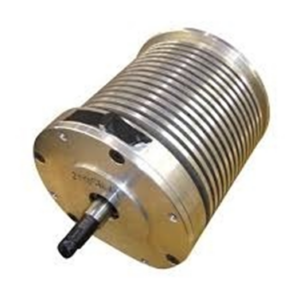
Reluctance motors offer high power density at a relatively low cost, making them suitable for a wide range of applications. The operating principle of this motor is based on the tendency of magnetic materials to align themselves in the direction of minimum magnetic reluctance when exposed to a magnetic field. The key specifications of a reluctance motor include:
- Number of phases
- Stator-to-rotor pole ratio
- Rated power or torque
- Torque ripple
- Constant torque speed range
- Power factor
- Efficiency
The power factor of a reluctance motor is generally lagging, while its efficiency typically ranges from 55% to 75%.
Construction of Reluctance Motor
The construction of a reluctance motor involves designing the rotor by removing teeth at specific locations to create salient poles. For example, removing teeth at four locations results in a four-pole rotor structure. In a single-phase reluctance motor, two rotor rings are short-circuited. When the stator is connected to a single-phase AC supply, the motor initially operates as a single-phase induction motor.
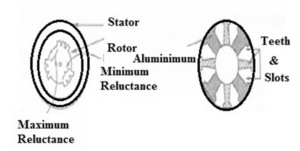
A centrifugal switch disconnects the auxiliary winding when the motor speed approaches synchronous speed. The motor continues accelerating due to the action of the primary winding. As the rotor speed nears synchronous speed, the rotor tends to align itself with the position of minimum magnetic reluctance, thereby producing reluctance torque. This causes the rotor to lock into synchronism and continue rotating at synchronous speed. For efficient operation, the load inertia must remain within acceptable limits. Although the induction torque disappears at synchronism, the rotor remains synchronized due to the synchronous reluctance torque.
Working Principle of Reluctance Motor
The operation of a reluctance motor is based on the principle that magnetic flux always follows the path of least reluctance. The motor consists of two major parts:
- Stator
- Rotor
An air gap exists between the stator and rotor. Although the construction varies depending on the type of reluctance motor, the basic operating principle remains the same. The stator contains salient poles energized by electrical current, creating a rotating magnetic field. The rotor is typically made of ferromagnetic material and also contains salient poles. When the salient poles of the rotor align with the stator poles, the magnetic reluctance becomes minimum. Conversely, when the rotor poles align with the stator slots or gaps, the reluctance becomes maximum.
Because systems naturally seek the lowest energy state, the rotor always moves toward the position of minimum magnetic reluctance. This movement creates a reluctance torque that pulls the rotor toward the nearest stator pole, causing continuous rotation.
Types of Reluctance Motor
Reluctance motors are mainly classified into the following types:
1. Synchronous Reluctance Motor
A synchronous reluctance motor operates precisely at synchronous speed using a three-phase stator winding and a specially designed rotor containing salient poles and magnetic flux barriers. To enable self-starting capability, the rotor often incorporates a modified squirrel-cage structure. During startup, the motor behaves like an induction motor and accelerates toward synchronous speed. Once near synchronous speed, the reluctance torque generated by the rotor locks the motor into synchronism.
2. Switched Reluctance Motor
A switched reluctance motor (SRM) is a type of stepper motor that contains multiple poles. Due to its simple construction, it is less expensive to manufacture than many other electric motors. These motors are commonly used in hazardous environments, such as mining applications, because the rotor can remain stationary for extended periods without damage. The phase windings of switched reluctance motors are electrically isolated from each other, providing better fault tolerance compared to inverter-driven AC induction motors.
Advantages of Reluctance Motor
- Does not require a DC supply.
- Provides stable operating characteristics.
- Requires minimal maintenance.
- Generates less heat.
- Does not require permanent magnets.
- Offers effective speed control.
- Simple and robust construction.
- Cost-effective design.
Disadvantages of Reluctance Motor
- Lower efficiency compared to some other motor types.
- Poor power factor.
- Requires frequency control.
- Limited load-driving capability.
- Requires a low-inertia rotor.
- May exhibit torque ripple.
Applications of Reluctance Motor
- Signaling devices
- Control devices
- Automatic regulators
- Recording instruments
- Electric clocks
- Teleprinters
- Gramophones
- Analog electric meters
- Electric vehicles
- Industrial automation systems
- Power tools such as drills, lathes, band saws, and presses
Conclusion
A reluctance motor is a simple, reliable, and cost-effective electric motor that operates on the principle of magnetic reluctance. Its ability to operate without permanent magnets or DC excitation makes it suitable for a variety of industrial and commercial applications. Despite certain limitations, such as lower power factor and efficiency, advancements in motor control technologies continue to increase the popularity of reluctance motors in modern applications.