
" "
Semiconductor for You
  • Home
  • Semiconductor News
  • Semiconductor Magazine
  • Technology
    • Automotive
    • Consumer Electronics
    • IoT
    • Test and Measurement
    • Lighting
    • Power Management
    • Wireless
    • Personal Electronics
    • Hardware & Software
    • Research
    • Medical Electronics
    • Embedded Design
    • Aerospace & Defence
    • Artificial Intelligence
  • Interview
  • Industries
  • Market
  • Knowledge Base
  • Events
  • Tools
    • Resistor Color Code Calculator
No Result
View All Result
  • Home
  • Semiconductor News
  • Semiconductor Magazine
  • Technology
    • Automotive
    • Consumer Electronics
    • IoT
    • Test and Measurement
    • Lighting
    • Power Management
    • Wireless
    • Personal Electronics
    • Hardware & Software
    • Research
    • Medical Electronics
    • Embedded Design
    • Aerospace & Defence
    • Artificial Intelligence
  • Interview
  • Industries
  • Market
  • Knowledge Base
  • Events
  • Tools
    • Resistor Color Code Calculator
No Result
View All Result
Semiconductor for You
No Result
View All Result
Home Articles

Working of transistor

Semiconductor For You by Semiconductor For You
June 1, 2021
in Articles
0

The name of this electronic device is derived from it’s fundamental action transfer resistor.

Working of transistor
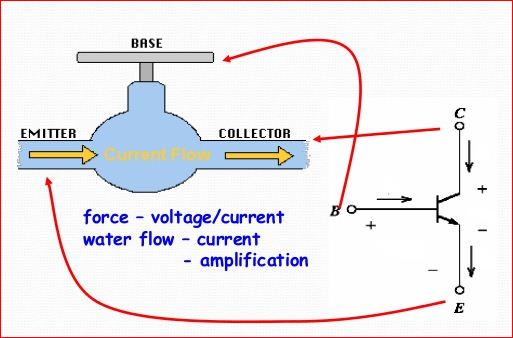
There are four possible ways of biasing the two P-N junctions (emitter junction and collector junction) of transistor.

  • Active mode: Also known as linear mode operation.
  • Saturation mode: Maximum collector current flows and transistor acts as a closed switch from collector to emitter terminals.
  • Cut-off mode: Denotes operation like an open switch where only leakage current flows.
  • Inverse mode: The emitter and collector are inter changed.
Operating mode Emitter base bias Collector base bias
Active Forward Reverse
Saturation Forward Forward
Cut off Reverse Reverse
Inverse Reverse Forward

.

Tags: Semiconductorstransistor
Semiconductor For You

Semiconductor For You

Browse by Category

  • Aerospace and Defence
  • AI & Data Center
  • Articles
  • Automotive
  • Communication
  • Consumer-Electronics
  • Design & Manufacturing
  • Hardware & Software
  • Interview
  • IoT
  • Knowledge Base
  • Lighting
  • Market
  • personal-electronics
  • Power Management
  • Research
  • Semiconductor Events
  • Semiconductor News
  • Technology
  • Test and Measurement
  • Uncategorized
  • Wireless
Semiconductor For You

Semiconductor For You is a resource hub for electronics engineers and industrialist. With its blend of
technology features, news and new product information, Semiconductor For You keeps designers and
managers up to date with the fastest moving industry in the world.

Follow Us

Browse by Category

  • Aerospace and Defence
  • AI & Data Center
  • Articles
  • Automotive
  • Communication
  • Consumer-Electronics
  • Design & Manufacturing
  • Hardware & Software
  • Interview
  • IoT
  • Knowledge Base
  • Lighting
  • Market
  • personal-electronics
  • Power Management
  • Research
  • Semiconductor Events
  • Semiconductor News
  • Technology
  • Test and Measurement
  • Uncategorized
  • Wireless

Recent News

What is an Electric Generator? Construction, Working Principle & Applications

What is an Electric Generator? Construction, Working Principle & Applications

July 4, 2026
What is a DC Generator? Construction, Working Principle, Advantages & Applications

What is a DC Generator? Construction, Working Principle, Advantages & Applications

July 4, 2026
  • About
  • Advertise
  • Privacy & Policy
  • Contact

© 2026 Semiconductor For You

No Result
View All Result
  • Home
  • Semiconductor News
  • Technology
    • IoT
    • Wireless
    • Power Management
    • Automotive
    • Hardware & Software
  • Market
  • Interview
  • Knowledge Base
  • Tools
    • Resistor Color Code Calculator

© 2026 Semiconductor For You

Advertisement