Semiconductor for You
  • Home
  • Semiconductor News
  • Semiconductor Magazine
  • Technology
    • Automotive
    • Consumer Electronics
    • IoT
    • Test and Measurement
    • Lighting
    • Power Management
    • Wireless
    • Personal Electronics
    • Hardware & Software
    • Research
    • Medical Electronics
    • Embedded Design
    • Aerospace & Defence
    • Artificial Intelligence
  • Interview
  • Industries
  • Market
  • Knowledge Base
  • Events
  • Tools
    • Resistor Color Code Calculator
No Result
View All Result
  • Home
  • Semiconductor News
  • Semiconductor Magazine
  • Technology
    • Automotive
    • Consumer Electronics
    • IoT
    • Test and Measurement
    • Lighting
    • Power Management
    • Wireless
    • Personal Electronics
    • Hardware & Software
    • Research
    • Medical Electronics
    • Embedded Design
    • Aerospace & Defence
    • Artificial Intelligence
  • Interview
  • Industries
  • Market
  • Knowledge Base
  • Events
  • Tools
    • Resistor Color Code Calculator
No Result
View All Result
Semiconductor for You
No Result
View All Result
Home Knowledge Base

Types of synchronous motor

Ankita Dhawankar by Ankita Dhawankar
July 14, 2021
in Knowledge Base
0
ADVERTISEMENT

There are mainly two types of AC motors,the synchronous motor and the induction motor.

Synchronous motor  

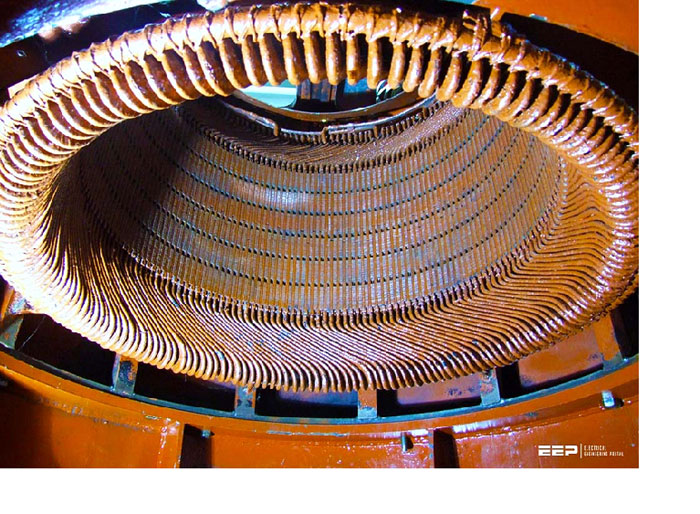
Synchronous motor is the AC motor in which the rotor will rotate synchronously with the rotating magnetic field produced by the electrical supply. in a simple words, it is a type motor in which the speed of the rotor is same as the speed of the revolving field in the machine. in synchronous motor, the stator is similar to that of induction motor.

ADVERTISEMENT

There are two types of synchronous motors. the motors are differentiate on how the rotor is magnetized: non-excited and direct-current excited.
Non-excited motors

In non-excited motors, the rotor is made of steel, a high-retentivity steel such as cobalt steel. These are manufactured in permanent magnet, reluctance and hysteresis designs.

  • Permanent magnet motor

To create a constant magnetic field a permanent-magnet synchronous motor use a permanent magnets which is embedded in the rotor. The stator windings are connected to an AC supply which produce a rotating magnetic field. the rotor poles lock to the rotating magnetic field at synchronous speed. since 2000,Permanent magnet motors have been used as gearless elevator motors. PMSM are also known as line-start or self-starting PMSMs. Direct torque control and field oriented control are used to control Permanent magnet synchronous motors.

  • Reluctance motors  

A reluctance motor is a type of electric motor that induces non-permanent magnetic poles on the ferromagnetic rotor. The rotor does not have any windings. through magnetic reluctance it generates torque .Because of their high power density at low cost, reluctance motor make them attractive for many applications.

  • Hysteresis motors

A synchronous motor which have cylindrical rotor and works on hysteresis losses induced in the rotor of hardened steel with high retentivity is known as Hystersis motors. It is a single phase motor.its rotor is made of ferromagnetic material with non magnetic support over the shaft.

DC-excited motors

At the rear of the machine the exciter can be clearly seen. they are usually made in larger in size that is larger than about 1 horsepower or 1 kilowatt. These motors require direct current (DC) supplied to the rotor for excitation. This is most straightforwardly supplied through slip rings, but a brushless AC induction and rectifier arrangement may also be used. A separate DC source or a DC generator is directly connected to the motor to supply direct current.



Tags: synchronous motor
Ankita Dhawankar

Ankita Dhawankar

Browse by Category

  • Aerospace and Defence
  • AI & Data Center
  • Articles
  • Automation
  • Automotive
  • Communication
  • Consumer-Electronics
  • Design & Manufacturing
  • Hardware & Software
  • Industrial Electronics
  • Interview
  • IoT
  • Knowledge Base
  • Lighting
  • Market
  • personal-electronics
  • Power Management
  • Research
  • Semiconductor Events
  • Semiconductor News
  • Sensors
  • Technology
  • Test and Measurement
  • Uncategorized
  • Wireless
Semiconductor For You

Semiconductor For You is a resource hub for electronics engineers and industrialist. With its blend of
technology features, news and new product information, Semiconductor For You keeps designers and
managers up to date with the fastest moving industry in the world.

Follow Us

Browse by Category

  • Aerospace and Defence
  • AI & Data Center
  • Articles
  • Automation
  • Automotive
  • Communication
  • Consumer-Electronics
  • Design & Manufacturing
  • Hardware & Software
  • Industrial Electronics
  • Interview
  • IoT
  • Knowledge Base
  • Lighting
  • Market
  • personal-electronics
  • Power Management
  • Research
  • Semiconductor Events
  • Semiconductor News
  • Sensors
  • Technology
  • Test and Measurement
  • Uncategorized
  • Wireless

Recent News

Description of Antenna Tuner or Antenna Tuning

Description of Antenna Tuner or Antenna Tuning

July 25, 2026
Caliber Interconnects Showcases AI-Driven Semiconductor Testing Leadership at IEEE ITC India 2026 Bengaluru, India

Caliber Interconnects Showcases AI-Driven Semiconductor Testing Leadership at IEEE ITC India 2026 Bengaluru, India

July 25, 2026
  • About
  • Advertise
  • Privacy & Policy
  • Contact

© 2026 Semiconductor For You

No Result
View All Result
  • Home
  • Semiconductor News
  • Technology
    • IoT
    • Wireless
    • Power Management
    • Automotive
    • Hardware & Software
  • Market
  • Interview
  • Knowledge Base
  • Tools
    • Resistor Color Code Calculator

© 2026 Semiconductor For You