
Introduction
An antenna tuner, also known as an Antenna Tuning Unit (ATU) or antenna matching unit, is an important device used in radio communication systems. It is generally associated with HF transmitters and receivers used for amateur radio, broadcasting, commercial communication, military communication, and other radio applications.
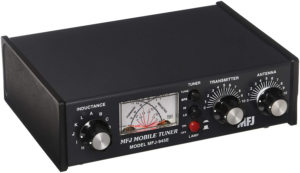

The primary purpose of an antenna tuner is to match the impedance of the radio transmitter or receiver with the impedance presented by the antenna feed line. Proper impedance matching helps improve power transfer and allows the radio system to operate more efficiently.
What is an Antenna Tuner?
An antenna tuner is a device connected between a radio transmitter and its antenna. It is adjusted or tuned to provide an appropriate impedance match between the radio and the end of the feed line connected to the antenna. In an HF radio system, the antenna tuner helps ensure that the impedance seen by the transmitter is suitable for efficient power transfer. This makes the antenna tuner an important component of many HF radio communication stations.
What is Antenna Tuning?
Antenna tuning is the process of adjusting an antenna matching network so that the impedance of the antenna system is appropriately matched to the transmitter or receiver. When the antenna system and radio are properly matched, power can be transferred more efficiently between the transmitter and antenna. An antenna tuner can be used to achieve this matching when the antenna itself does not naturally present the required impedance.
How Does an Antenna Tuner Work?
- The radio transmitter sends an RF signal toward the antenna system.
- The feed line connects the transmitter to the antenna.
- The antenna may have an impedance that does not directly match the required impedance of the transmitter.
- The antenna tuner is connected between the transmitter and the antenna feed line.
- The tuner is adjusted to create an appropriate impedance match.
- The improved match allows more efficient transfer of RF power from the transmitter to the antenna system.
In this way, the antenna tuner acts as an impedance matching network between the radio equipment and the antenna system.
HF Antenna Tuner for Amateur Radio
HF antenna tuners are widely used with amateur radio transceivers. A typical HF antenna tuner may be designed to operate across a wide frequency range, such as 1.8 MHz to 60 MHz, depending on the design and application. For example, an HF antenna tuner designed for a 300 W amateur radio transceiver can be used to help match the radio system to an antenna or feed line over its specified operating frequency range. The exact frequency range and power-handling capability depend on the particular antenna tuner design.
Why is an Antenna Tuner Important?
The main purpose of an antenna tuner is to ensure that the antenna system impedance is suitably matched to the transmitter or receiver. This helps achieve optimum performance from the radio communication system.
- Improves impedance matching.
- Helps improve RF power transfer.
- Allows a radio system to work with antenna systems having different impedance characteristics.
- Can help a transmitter operate more effectively with a mismatched antenna system.
- Is useful in HF radio communication applications.
- Can be an essential part of many amateur and professional radio stations.
Applications of Antenna Tuners
Antenna tuning units are used in various radio communication applications, including:
- Amateur Radio: Used with ham radio transmitters and receivers to match antenna systems.
- Broadcasting: Used as part of radio transmission systems.
- Commercial Radio: Helps provide appropriate impedance matching in professional communication systems.
- Military Communication: Used in HF radio communication equipment.
- HF Radio Stations: Used in transmitting and receiving HF communication systems.
- Professional Radio Communication: Used wherever antenna and feed-line impedance matching is required.
Other Names for an Antenna Tuner
An antenna tuner can be known by several different names depending on the application and design. Common names include:
- Antenna Tuning Unit (ATU)
- Matching Network
- Impedance Matching Unit
- Antenna Impedance Matching Unit
- Matchbox
- Transmatch
- Antenna Match
- Antenna Coupler
- Feed Line Coupler
Antenna Tuner vs. Antenna
| Feature | Antenna | Antenna Tuner |
|---|---|---|
| Primary Function | Radiates or receives radio-frequency signals. | Provides impedance matching between the radio and antenna system. |
| Location | Installed as the radiating or receiving element. | Usually connected between the radio and the antenna feed line. |
| Main Purpose | Transmit or receive RF energy. | Improve impedance matching and power transfer. |
| Typical Use | Used in radio communication systems. | Used when the antenna system does not directly provide the desired impedance match. |
Conclusion
An antenna tuner is an important component of many HF radio communication systems. It is connected between the radio transmitter or receiver and the antenna feed line to provide impedance matching. The main objective of antenna tuning is to obtain a suitable impedance match and improve power transfer between the radio and antenna system. Antenna tuners are widely used in amateur radio, broadcasting, commercial communication, military communication, and professional HF radio stations. Depending on the application, an antenna tuner may also be called an Antenna Tuning Unit (ATU), matching network, antenna coupler, transmatch, or feed line coupler.