
Unified, production-ready platform across TI’s MCU, MPU and wireless connectivity solutions eliminates migration barriers and accelerates time to market for Zephyr developers worldwide
What’s new?
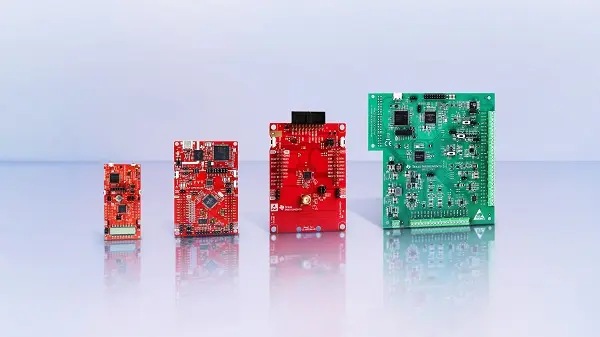
Texas Instruments (TI) today announced that its broad embedded portfolio is now supported on the Zephyr Project, the open-source real-time operating system (RTOS). This integration delivers a unified, production-ready development experience across TI’s full range of microcontrollers (MCUs), microprocessors (MPUs) and wireless connectivity devices – purpose-built for embedded developers seeking accelerated development time and a system compliant with the Cyber Resilience Act (CRA).

While fragmented software ecosystems often require developers to rewrite code when changing semiconductor vendors, TI’s platform based on Zephyr delivers a single, consistent development experience. Developers can migrate to TI without disrupting existing open-source workflows, while gaining access to a comprehensive, higher-performing hardware portfolio.
Why does it matter?
TI’s partnership with the Zephyr Project empowers developers – from hobbyists to design engineers – to create a wide range of systems on a single, streamlined platform. Backed by long-term support of the Linux Foundation, TI regularly updates its Zephyr-based software development kits (SDKs) to address security vulnerabilities, so developers can build products that stay reliable and compliant for years to come.
“With TI and Zephyr, developers get everything they need to design and scale with ease across our full MCU, MPU and wireless connectivity portfolios,” said Marian Kost, vice president and general manager of Wireless Connectivity at TI. “They can stay in the open-source workflow that they know on the TI silicon they trust, leveraging the hardware breadth, software support and supply reliability needed to take a design from prototype to production.”
“A vendor-neutral RTOS only works when companies build on it together, and Texas Instruments making its broad portfolio available on Zephyr is a strong example of that commitment,” said Kate Stewart, Vice President of Dependable Embedded Systems at the Linux Foundation. “Developers can design across TI’s MCUs, MPUs and wireless devices on a common, upstream-first platform, backed by a community that takes security and long-term maintenance seriously.”
More details
Embedded developers increasingly rely on the Zephyr Project not just as an RTOS, but as a thriving, neutral open-source community where real-world development expertise shapes roadmaps and drives adoption.
By actively contributing code and reference designs to the upstream Zephyr community, TI enables developers to keep their existing codebase, gain access to a broader and higher-performing hardware portfolio, and reduce long-term security risk. For developers, this means:
- No workflow disruption: Keep existing Zephyr codebases and toolchains intact when moving to TI chips.
- Upstream first code review: The Zephyr community vets TI’s code before any SDK release, giving developers a stable codebase that won’t change during product ramp-up.
- Public repository and continuous integration/continuous deployment (CI/CD): CI/CD on public GitHub pages provides early, instant access to resources and new features well before they reach the final SDK.
- Broader hardware choice: Design a full system with TI’s comprehensive embedded and analog portfolios without leaving the Zephyr RTOS environment.
- Lower long-term risk: Comprehensive resources – including validated releases, migration guides and backward-compatibility notes – reduce maintenance burdens over a product built on TI silicon supporting life cycles for over 10 years.
- Regulatory readiness: CRA compliance removes a significant barrier for developers targeting markets in the European Union (EU).
For more information, see ti.com/zephyr.
FAQ
- What TI devices are included in Zephyr’s ecosystem?
- The ecosystem includes TI’s embedded portfolio, including MCUs ranging from ultra-low-power M0 devices to high-performance M33 cores, MPUs and wireless connectivity devices. The Zephyr platform is designed to scale across use cases, from simple sensing to complex connected embedded systems.
- How does this expansion help developers who are already using Zephyr?
- Developers currently using Zephyr on other platforms can migrate to TI silicon without rebuilding their codebase or abandoning their existing workflow. TI’s integration is designed to minimize migration friction while offering access to a broader hardware portfolio.
- What does EU CRA compliance mean for developers?
- The CRA is an EU regulation that sets cybersecurity requirements for products with digital elements. Since TI’s Zephyr platform is CRA-compliant, developers targeting EU markets can use TI’s platform with confidence that it meets current regulatory requirements, reducing compliance burdens on their end.
- Where can developers access the platform and learn more?
- Full documentation, SDKs and reference designs are available at ti.com/zephyr.