
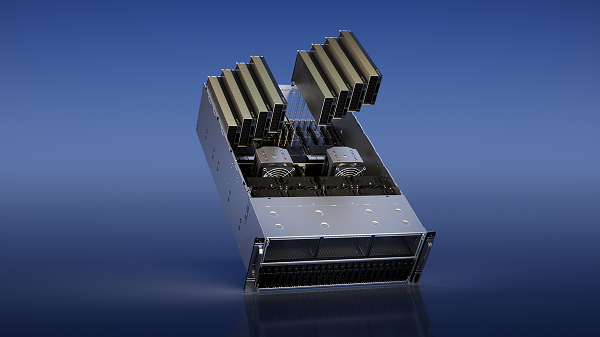
As AI applications expand from model training to inference and AI agent workloads, server configurations are also changing. GPUs remain important, but systems now require more memory capacity and higher bandwidth. As a result, server DRAM is becoming a new area of supply concern.

This trend is already affecting market prices. TrendForce expects server DRAM contract prices to rise. The increase is 13% to 18% quarter‑on‑quarter. This will happen in the third quarter of 2026. CPU supply is gradually improving. This improvement should support higher server production. It should also increase demand for RDIMMs. But server DRAM supply is still likely to stay tight during that quarter.
TrendForce also expects RDIMM bit supply to grow. The growth is only 15% to 20% year‑over‑year in 2027. This growth may fall behind the increase in server CPU shipments. These forecasts suggest that price and supply pressure will continue. It may last beyond a single quarter.
AI Demand Is Changing the DDR5 Supply Structure
On the supply side, memory makers are adding little new wafer capacity. They are mainly increasing bit output through process upgrades. They also have to split production resources between HBM and server DRAM.
At the same time, AI demand is expanding. It now covers model training, inference, and AI agent applications. These workloads need CPUs for data preprocessing, task scheduling, and memory management. As a result, servers require more DDR5 RDIMM capacity. They also need higher memory bandwidth.
This pressure eventually affects the availability of specific part numbers. Take Micron’s MT60B2G8RZ‑64B:D as an example. It is a 16Gb, x8 DDR5 device. Its data rate is 6400MT/s. It uses a 78‑ball VFBGA package. Its operating temperature range is 0°C to 95°C. Micron currently lists this device as “Production.”
There is also an industrial‑temperature version. Its part number is MT60B2G8RZ‑64B IT:D. It supports a temperature range from ‑40°C to 95°C. But Micron lists this version as “Contact Sales.” This status does not mean the device is out of stock. It does mean that procurement teams need to confirm supply method, price, and lead time directly. Teams should not plan a project based only on the base part number.
Procurement Challenges Go Beyond Higher Prices
Under these conditions, procurement teams face more than rising prices and changing lead times. They also have to handle replacement validation, lot consistency, and platform compatibility.
Teams should not compare DDR5 devices by capacity and speed alone. They must also check package type, pin configuration, timing, voltage, temperature grade, RCD compatibility, and server platform validation results. Similar specifications do not always guarantee direct replacement.
Three Steps to Reduce Delivery Risk
Step 1: Plan backward from the project delivery date. For high‑risk server memory, procurement teams should confirm the primary part number, forecast quantity, and budget at least one quarter in advance.
Step 2: Build separate backup lists for DRAM components and complete modules. Engineering teams should reserve enough time for platform testing and validation. A period of four to eight weeks can serve as a general planning reference. But the actual schedule should depend on the project.
Step 3: Review high‑risk part numbers every week. Procurement teams should track prices, lead times, production lots, and supply sources. When a temporary shortage appears, an independent distributor can help verify global stock, production dates, and quality documents. It can also help identify possible supply options. However, procurement, quality, and engineering teams should make the final approval decision together.
In this process, WIN SOURCE can support the existing supply network. We help connect planned purchasing, source verification, and urgent replenishment. Effective DDR5 risk management should not start after a shortage occurs. It should start with a reviewed and practical backup supply route.
© 2026 Win Source Electronics. All rights reserved. This content is protected by copyright and may not be reproduced, distributed, transmitted, cached or otherwise used, except with the prior written permission of Win Source Electronics.