
By Vivek Jaykrishnan, Vice President – Delivery Centers at ALTEN India

Over the last two and a half decades, our industry has competed on two things: scale and execution. Global delivery centers were built to absorb engineering demand – CAD, embedded software, simulation, documentation and deliver reliably, on time and at competitive cost.
That model will continue. But it will not define who leads the next decade.
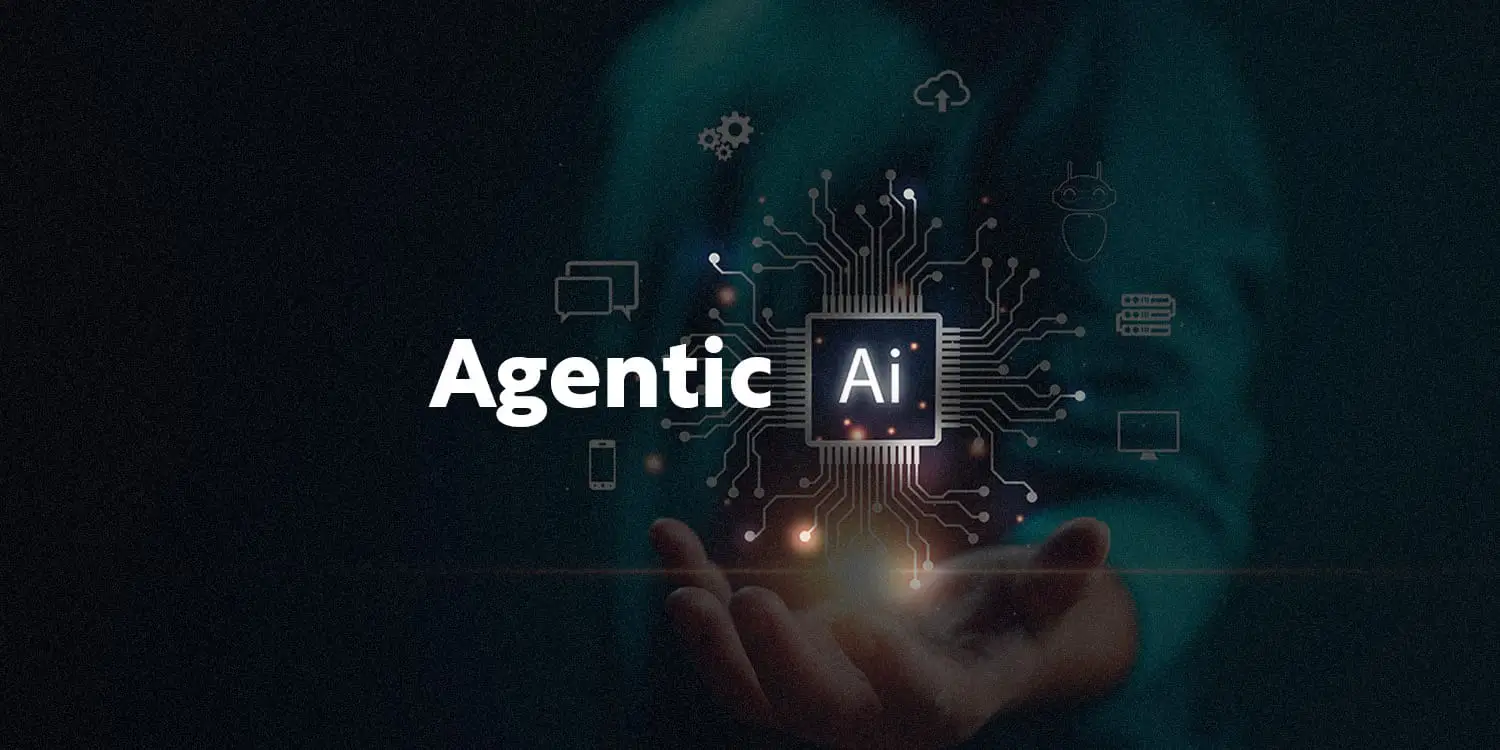
Agentic AI – systems that can plan, act, iterate, and course-correct with minimal human input – is beginning to change the nature of engineering work itself. The shift is not incremental. It is structural.
From copilot to agent
Engineering teams are now familiar with AI copilots. They assist with coding, summarization, and documentation – but they still require continuous human direction.
Agents operate differently.
Given a defined goal, an agent can break down the problem, generate solutions, run simulations, interpret results, and iterate toward optimized outcomes. Engineers remain accountable, but their role shifts – from executing tasks to evaluating outcomes.
At scale, this transition begins to redefine productivity and cost structures across engineering programs.
What is changing across engineering workflows
In mechanical engineering, design cycles that once took weeks are compressing into days as agents handle iterative loops. Outputs are faster and more robust, supported by simulation evidence and built-in traceability.
In embedded systems, agents are enabling autonomous workflows—decomposing requirements, generating code, running tests, and identifying defects. Complex update cycles that previously took weeks can now be executed far more efficiently.
In systems engineering, agents reduce fragmentation by maintaining traceability, identifying conflicts early, and improving consistency across tools and teams.
In technical documentation, static deliverables are being replaced by dynamic systems that update with engineering changes and provide context-aware insights.
Where this is already visible
In aerospace, agents are running large-scale design optimizations overnight, delivering validated options with built-in compliance traceability.
In automotive, anomaly detection, patch development, and validation cycles are compressing significantly through agent-driven workflows.
In industrial environments, machines are beginning to detect deviations, adjust operations, and trigger downstream actions such as maintenance or supply chain responses.
These are not future scenarios—they are emerging in active programs.
What this looks like in practice
In our work at ALTEN, we are beginning to see this shift move from concept to deployment.
In a recent engagement in the U.S. industrial machinery space, agentic AI is being applied across the value chain—from autonomous sales quoting to workflow orchestration and AI-assisted engineering outputs.
What makes this significant is not just the use of AI, but where it is being applied. In an industry where adoption is still nascent, these systems are starting to reshape how engineering and operational decisions are made—introducing new levels of speed, consistency, and adaptability.
This is not an isolated pilot. It is an early indicator of how agentic capabilities will embed themselves into core engineering workflows.
A case in point
An equipment manufacturer facing recurring component failures would traditionally spend weeks on analysis, redesign, and validation.
With an agentic approach, field data is analyzed automatically, design alternatives are generated and tested, manufacturability is validated, and documentation is updated in parallel.
Engineers remain responsible for final decisions, but they engage with a problem that is already structured and supported by evidence. The result is a significantly compressed cycle time.
From cost arbitrage to capability arbitrage
Engineering delivery has long been driven by cost efficiency and scale. That advantage is diminishing.
As agentic systems take on execution-heavy tasks, differentiation shifts to capability—specifically, the strength of agentic platforms, domain expertise, and governance.
This transition requires:
- A shift in talent toward validation, orchestration, and judgment
- Investment in reusable engineering assets such as agent libraries and simulation pipelines
- Movement toward outcome-based models as effort becomes less tied to headcount
Governance is non-negotiable
Agentic systems introduce new risks, particularly the ability to scale errors rapidly.
Three principles are critical:
- Clear human accountability in all regulated workflows
- Complete, auditable decision trails
- Strict operating boundaries with continuous validation
Without these, efficiency gains come at unacceptable risk.
What leaders should focus on now
Start with workflows. Identify where cycle time, rework, or resource constraints are limiting performance.
Strengthen the data foundation. Agentic systems depend on well-structured, well-governed engineering data.
Run pilots with production intent. Define success clearly and ensure integration into real workflows.
Measure what matters—cycle time, quality, and adaptability—not utilization.
The shift ahead
Engineering services are moving toward a model defined by intelligence, domain depth, and agentic capability. Traditional scale-driven approaches will remain, but they will no longer be sufficient on their own.
The shift is already underway.
The question is whether organizations are adapting at the pace required.
About the Author

Vivek Jaykrishnan brings over 27 years of experience at the intersection of engineering, technology and business transformation. A dynamic leader, he has consistently driven excellence across engineering services – spanning operations, delivery management, talent strategy and technology innovation.
Known for building high-impact teams and scaling capabilities, Vivek has played a key role in delivering complex, future-ready solutions for global clients across industries.
Currently serves as Vice President – Delivery Centers at ALTEN India, he continues to champion innovation, operational excellence and talent-led transformation