
Introduction
Electric motors are responsible for many of the mechanical advancements we see in our daily lives. An electric motor is an energy conversion device that converts electrical energy into mechanical energy. Numerous household appliances, industrial machines, and electronic devices operate using electric motors. Electric motors are generally classified into two main categories:
- Alternating Current (AC) Motors
- Direct Current (DC) Motors
What is a DC Motor?
A Direct Current (DC) Motor is an electrical machine that converts direct current electrical energy into mechanical energy. The operation of a DC motor is based on the principle of electromagnetism. When a current-carrying conductor is placed inside a magnetic field, it experiences a mechanical force. This force causes the conductor to move, thereby producing rotational motion.

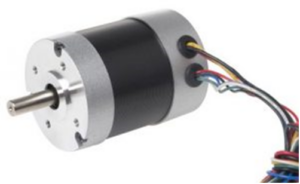
Brushless DC Motor
A practical DC motor consists of:
- Field Windings – Produce the magnetic field.
- Armature – Acts as the current-carrying conductor.
The generated mechanical motion can then be used to drive various machines and devices.
How Does a DC Motor Work?
A DC motor consists primarily of two components:
- Stator – The stationary part of the motor.
- Rotor (Armature) – The rotating part of the motor.
The rotor contains windings connected to a commutator. When electrical power is applied, current flows through these windings, creating a magnetic field. The interaction between the rotor magnetic field and the stator magnetic field generates a force that causes the rotor to rotate. As the rotor turns, the brushes move across the commutator segments, reversing the current direction within the armature windings. This continuous reversal maintains the rotational motion of the motor.
Construction of a DC Motor
The construction of a DC motor mainly consists of two major parts:
- Stator – The stationary component.
- Armature – The rotating component.
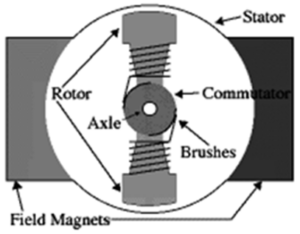
DC MOTOR
The armature is connected to the DC power supply through brushes and a commutator. The primary function of the commutator is to convert the alternating current induced in the armature into direct current. The armature may be positioned either between the poles of an electromagnet or a permanent magnet.
Parts of a DC Motor
Although several types of DC motors exist, most of them contain similar components.
1. Stator
The stator is the stationary part of the motor that contains the field windings responsible for producing the magnetic field.
2. Rotor (Armature)
The rotor is the rotating component that converts electrical energy into mechanical rotation.
3. Brushes
Brushes provide the electrical connection between the stationary circuit and the rotating armature.
4. Commutator
The commutator is a segmented copper ring that reverses current flow in the armature, ensuring continuous rotation.
5. Field Windings
Field windings are copper coils wound around the pole shoes that generate the magnetic field.
6. Armature Windings
Armature windings are typically constructed using:
- Lap Winding
- Wave Winding
7. Yoke
The yoke forms the outer magnetic frame of the motor and is generally made from cast iron or steel.
8. Poles
Motor poles consist of pole cores and pole shoes that help distribute magnetic flux efficiently.
9. Teeth and Slots
Slots contain armature windings, while teeth provide the magnetic path between slots.
10. Motor Housing
The motor housing supports the bearings, brushes, and iron core structure.
Working Principle of a DC Motor
A DC motor operates on the principle that a current-carrying conductor placed inside a magnetic field experiences a mechanical force. The direction of this force is determined using Fleming’s Left-Hand Rule.
- The first finger represents the magnetic field direction.
- The second finger represents the current direction.
- The thumb represents the force direction.
The force acting on the conductor is given by:
F = BIL Newtons
Where:
- B = Magnetic flux density
- I = Current flowing through the conductor
- L = Length of the conductor inside the magnetic field
When current flows through the armature winding, the magnetic field generated by the field winding or permanent magnets interacts with it, producing rotational force. The commutator ensures that the torque remains unidirectional, allowing continuous rotation.
Types of DC Motors
1. Brushless DC Motor (BLDC)
A Brushless DC Motor (BLDC) receives electrical current and voltage as inputs and produces mechanical torque as output. Unlike conventional DC motors, BLDC motors do not use brushes or mechanical commutators. Instead, they use electronic commutation, resulting in:
- Higher efficiency
- Longer lifespan
- Lower maintenance
- Reduced noise
2. Geared DC Motor
Geared DC motors combine a DC motor with a gearbox to reduce speed while increasing torque.
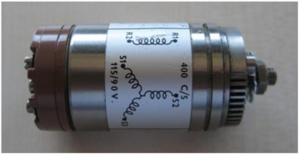
Geared DC Motors
These motors are widely used in:
- Robotics
- Industrial machinery
- Medical equipment
- Actuators
- Automation systems
Speed Reduction in Geared Motors
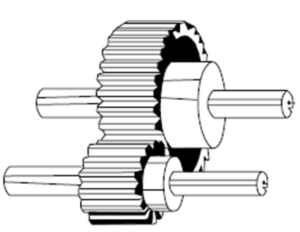
Speed Reduction in geared DC Motor
A gear train reduces motor speed by allowing a small gear to drive a larger gear. This reduction in speed results in a proportional increase in torque, which is particularly beneficial in robotic applications where high torque is more important than high speed. The relationship between speed and torque is inversely proportional.
3. Series DC Motor
A Series DC Motor is a motor in which the field winding and armature winding are connected in series. These motors provide:
- Very high starting torque
- Simple construction
- Low manufacturing cost
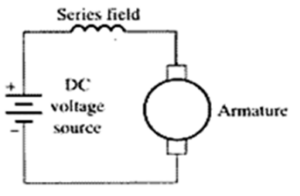
Series Motor
The magnetic field strength changes with armature current. Therefore, when the load increases, the motor develops greater torque. However, series motors should never be operated without load because their speed may increase to dangerous levels.
Advantages of Series DC Motor
- Very high starting torque
- Simple construction
- Easy design
- Easy maintenance
- Cost-effective
Applications of Series DC Motor
- Electric cranes
- Hoists
- Traction systems
- Portable electric tools
- Heavy-duty industrial equipment
- Electric vehicles
Advantages of DC Motors
- Excellent speed control.
- High starting torque.
- Simple control methods.
- Reliable operation.
- Wide speed range.
- Quick starting and stopping.
- Suitable for automation systems.
Disadvantages of DC Motors
- Brushes require regular maintenance.
- Brush sparking can occur.
- Higher maintenance costs than AC motors.
- More expensive than induction motors.
- Not suitable for explosive environments.
Applications of DC Motors
- Electric vehicles
- Industrial automation
- Robotics
- Conveyor systems
- Cranes and hoists
- Printing machines
- Machine tools
- Medical devices
- Household appliances
- Electric traction systems
Conclusion
A DC motor is an important electromechanical device that converts direct current electrical energy into mechanical energy. Due to their excellent speed control, high starting torque, and versatility, DC motors are widely used in industrial, commercial, and household applications. Various types of DC motors, such as brushless, geared, and series motors, provide specific advantages for different applications.